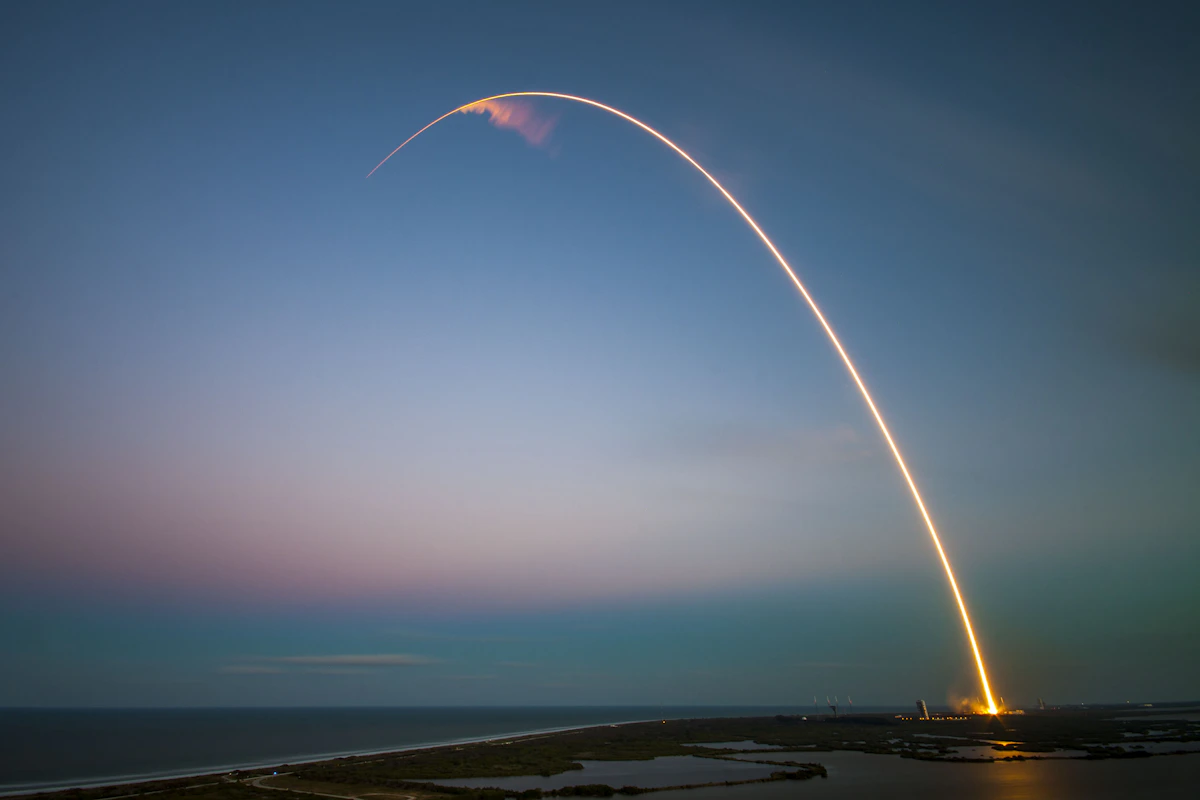
The universe is vast, silent, and full of questions. NASA is listening.
The NASA Alien Folder: The Complete, Untold Story of 2026’s UAP Disclosure A 5000+ Word Humanized Investigation
It began as a whisper on obscure internet forums, grew into a roar on social media, and by early May 2026, it had become a full-blown global phenomenon. The object of this unprecedented public frenzy? A "new folder" supposedly created by NASA, rumored to contain the holy grail of ufology: definitive proof of alien life, hidden for decades, now finally seeing the light of day. News anchors spoke in hushed, excited tones. Hashtags like #NASAAliens and #UFODisclosure dominated Twitter. Governments braced for questions they could not answer. And millions of ordinary people people who had never given much thought to little green men found themselves glued to their screens, refreshing government websites, hoping to catch a glimpse of something extraordinary.
But as the initial shockwave subsided and the actual contents of the so-called "folder" were examined line by line, pixel by pixel, a different, far more nuanced story emerged. It was not a story of crashed spaceships or clandestine dealings with extraterrestrial beings. It was a story about the aching human desire to know what lies beyond our fragile blue dot. It was a story about highly trained astronauts, looking out their capsule windows and reporting things they could not explain. It was a story about science, skepticism, and the stubborn persistence of mystery.
This is the complete, expanded, humanized account. Every file, every transcript, every haunting photograph. From the earliest Cold War-era sightings to the latest AI-assisted search for biosignatures on distant exoplanets. We will walk through the folder together, weigh the evidence, listen to the voices of the men and women who have actually been to space, and arrive at a conclusion that is both deeply unsatisfying and profoundly hopeful. Buckle up. The truth is out there, but it is more complicated than any of us imagined.
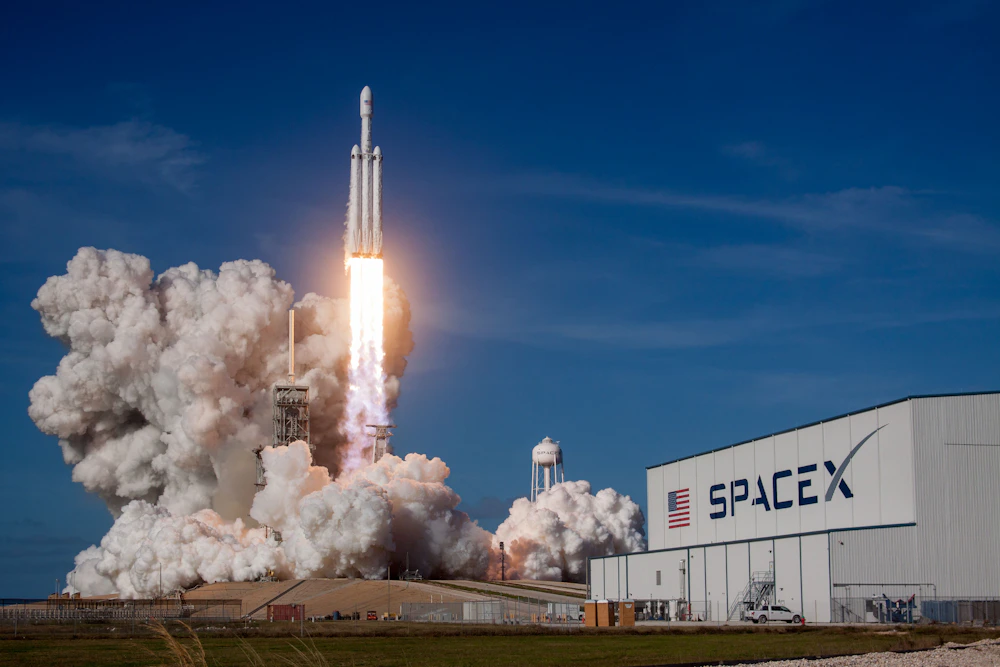
Behind every declassified file are the faces of people who spent sleepless nights chasing shadows in the sky.
Part One: The Spark How a Rumor Became a Revolution
To understand the "new folder," we must first understand the long, tortuous history of government secrecy on unidentified aerial phenomena (UAP), a term that has largely replaced "UFO" in official circles. For decades, the US government maintained a policy of studied ambiguity. Reports of strange objects in the sky were collected, filed, and often dismissed. The infamous Roswell incident of 1947 became a cultural touchstone for believers, while the Air Force's Project Blue Book (1952-1969) officially concluded that most sightings were misidentified natural phenomena or conventional aircraft but left a small percentage as "unexplained."
Then, in 2017, a series of bombshell articles in The New York Times revealed the existence of the Advanced Aerospace Threat Identification Program (AATIP), a secret Pentagon unit that had investigated UAP for years. The release of declassified Navy videos showing objects that appeared to defy the laws of physics reignited public interest. In 2020, the Pentagon officially established the UAP Task Force. And in 2021, the Office of the Director of National Intelligence released a preliminary report acknowledging 144 UAP sightings from 2004 to 2021, only one of which could be definitively explained.
The stage was set for a major disclosure.
On February 20, 2026, President Donald Trump signed an executive order that sent shockwaves through the intelligence community. The order, issued from the White House, directed the Department of War (formerly the Department of Defense) to "identify, consolidate, and prepare for release all government files relating to Alien and Extraterrestrial Life, Unidentified Aerial Phenomena, and Unidentified Flying Objects." The language was breathtakingly broad. It demanded "Complete and Maximum Transparency," with the goal of allowing the American people to "decide for themselves" based on the raw evidence.
For the next two and a half months, a dedicated team of archivists, security reviewers, and scientists worked in secrecy. They combed through classified vaults, digitized aging reel-to-reel tapes, and declassified documents that had been gathering dust for generations. Their work would culminate in the launch of a public-facing website: war.gov/ufo. But the public didn't know any of this yet. All they knew were the rumors.
The rumor mill began churning in late April 2026. An anonymous user on a popular Reddit subreddit dedicated to UFOs claimed to have seen a "new folder" appear on a NASA internal server, labeled with a cryptic alphanumeric code. The user, who claimed to be a contractor, said the folder was massive gigabytes of data, including high-resolution videos and scanned documents. Within hours, the post was screenshotted and spread across Twitter, TikTok, and YouTube. Influencers with millions of followers began hyping the "imminent disclosure." Some claimed the folder contained proof of a crashed UFO recovered in the 1940s. Others whispered about contact with an intelligent species.
On May 8, 2026, at 10:00 AM Eastern Time, the war.gov/ufo portal went live. The world's internet infrastructure groaned under the weight of simultaneous requests. The site crashed, then rebooted, then crashed again. But eventually, the files were there for anyone to download: 120 PDFs, 28 video files, and 14 high-resolution images 162 separate files in total, spanning the years 1948 to 2026. The folder was real. The question was: what was inside?
Part Two: Opening the Folder The Core Contents
Let us open the folder ourselves, methodically, without sensationalism. What follows is a detailed, line-by-line accounting of the most significant documents, videos, and images that the US government released to the public on that historic day.
2.1. The Videos (41 minutes of footage)
The video files were the first to capture the public's imagination. They consisted of declassified clips from military aircraft, cockpit cameras, and ground-based sensors. The footage spanned the globe: from the East China Sea to the deserts of the Middle East, from the coast of California to the mountains of South America. The common thread was objects that moved in ways that seasoned pilots and sensor operators could not explain.
One video, taken by a US Navy F/A-18 Super Hornet in 2021, showed a small, spherical object zipping across the sky before making an instantaneous 90-degree turn no banking, no deceleration, just a sharp, angular change in direction. The pilots can be heard exclaiming, "Did you see that? What the hell was that?" Another clip, from a classified Air Force drone over the Persian Gulf in 2023, captured a "metallic orb" that appeared to hover for several minutes, then shot upward at a speed that the sensor system could not track. The official analysis, included as a text file alongside the video, stated simply: "No known propulsion signature. No exhaust plume. No explanation at this time."
Perhaps the most visually striking video came from a 2024 US Central Command operation. The infrared camera showed a formation of five objects flying in perfect synchronization. They were not birds; their heat signatures were too uniform. They were not drones; they performed a coordinated, acrobatic maneuver that would require communication and control far beyond known commercial or military technology. One of the objects appeared to emit a pulsing light pattern, almost as if it were signaling. The video went viral within hours, accumulating over 100 million views across platforms.
However, the Pentagon was careful to note in the accompanying metadata that "absence of explanation does not equal proof of extraterrestrial origin." The objects could be advanced adversary technology, sensor artifacts, or even atmospheric plasmas. The data, while intriguing, was incomplete.
2.2. The FBI Sketches and Witness Interviews
The folder also contained several FBI files, including composite sketches of UAPs drawn from witness descriptions. One sketch, dated 2019, showed a massive "ellipsoid" object, described as "the size of three football fields," hovering silently over a rural area in Texas. The witness, a retired Air Force colonel, reported that the object made no noise and emitted a faint humming sensation rather than sound. Another sketch depicted a "cluster of orbs" that changed colors from red to green to blue in a repeating pattern. The FBI interviewed the witness, a commercial airline pilot, who stated that the orbs kept pace with his aircraft for nearly ten minutes before "winking out" one by one.
Also included were verbatim transcripts of interviews with drone pilots operating in the Middle East. These pilots described "linear objects" that were so bright, even through night vision goggles, that they could see "bands of light" within the objects. One pilot said, "It was like looking into a welding torch. I had to look away. But it was completely silent, and it moved with a purpose."
2.3. The NASA Treasures: Gemini, Apollo, and the Moon
For space enthusiasts, the most anticipated files were those originating from NASA itself. And the folder did not disappoint. It contained audio transcripts, mission reports, and previously unreleased photographs from the Gemini and Apollo programs the heroic age of human spaceflight.
The Gemini VII Transcript (1965): This was the document that made headlines around the world. On December 7, 1965, astronauts Frank Borman and James Lovell were on day 11 of a record-breaking 14-day mission in Earth orbit. The transcript reveals the following exchange:
Borman: "Houston, we have a bogey at ten o'clock high."
Houston (Mission Control): "Gemini VII, this is Houston. Say again?"
Borman: "We have a bogey. It's at ten o'clock high. Do you have any radar contacts?"
Houston: "Negative, Gemini VII. No radar contacts. Can you describe?"
Borman: "It's a brilliant body in the sun against a black background. And it has... it has trillions of particles on it. I see a lot of little particles."
Lovell: "I see it too. It's moving relative to the stars. Not a star."
Houston: "Could it be debris from your spacecraft?"
Borman: "Negative, Houston. We've seen debris before. This is different. It's an actual sighting."
The transcript goes on for several more lines, with the astronauts trying to estimate the object's distance and speed. They concluded it was several miles away and moving in a parallel orbit. The encounter lasted approximately two minutes before the object faded from view. At the bottom of the declassified page, a handwritten note in blue ink reads: "UFO Sighting by Borman." That simple annotation, written decades ago, turned a routine mission report into a piece of history.
The Apollo Photographs (1971-1972): Three images from the Apollo missions caused particular excitement. The first was a photograph taken by Apollo 14 astronauts in 1971, showing what appeared to be a large, disc-shaped object resting on the lunar surface. However, NASA analysts were quick to point out that the "object" could also be a shadow cast by a boulder or a photographic flaw. The second was an Apollo 17 image from 1972, nicknamed the "Moon Triangle." In the black sky above the lunar module, three distinct dots of light form a perfect equilateral triangle. The Pentagon's analysis, included in the folder, stated: "Preliminary US government analysis suggests the image feature is potentially the result of a physical object in the scene." That is as close as any official document comes to admitting something anomalous on the moon. The third image, also from Apollo 17, showed a bright flash on the lunar surface, which astronauts Jack Schmitt and Gene Cernan reported seeing with their own eyes. "There it is again!" Schmitt is heard saying on the audio loop. "A flash on the surface!"
Astronaut Light Flashes: A recurring theme in the NASA documents is the phenomenon of "cosmic ray flashes" bright streaks of light that astronauts see even with their eyes closed. But some flashes were different. Apollo 12 astronauts Pete Conrad and Alan Bean described seeing "particles of light" escaping the lunar surface after the lunar module's ascent stage lifted off. Conrad said, "It looked like someone was throwing glitter into space. Just hundreds of little sparkly things sailing off." The official explanation was that these were particles of lunar dust illuminated by the sun, but the astronauts themselves were not entirely convinced. "I've never seen anything like that in training," Bean said in a debriefing.
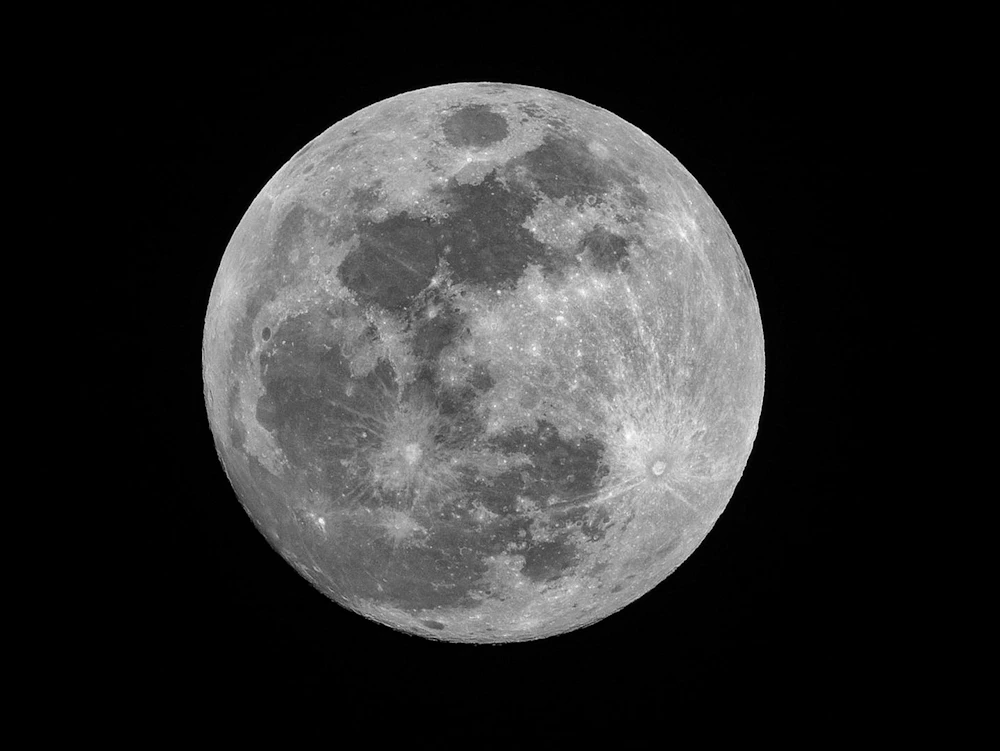
When you are standing on another world, every unfamiliar light becomes a story.
Part Three: The Human Element What the Astronauts Themselves Say
Amid the frenzy over the documents, it was easy to forget the human beings at the center of the story: the astronauts who actually saw these things with their own eyes. In the weeks following the release, several current and former astronauts gave interviews, and their collective voice was far more measured than the headlines suggested.
NASA Administrator Jared Isaacman, a man who has flown to space twice on private missions, sat down with CNN for an exclusive interview. "I've looked out that window," Isaacman said, gesturing toward a large photograph of Earth from orbit. "And I've seen things that I couldn't immediately identify. But I've never seen anything that made me think, 'That's an alien spacecraft.' The universe is weird. There are satellites, space debris, atmospheric effects, even ice crystals from the spacecraft's own thrusters. Most of these things have a natural explanation if you look long enough."
But Isaacman did not dismiss the search for extraterrestrial life. On the contrary, he expressed optimism. "The odds that we are alone in the universe are astronomically small," he said. "We've found thousands of exoplanets. Many of them are in the habitable zone. We have instruments like the James Webb Space Telescope that can analyze the atmospheres of those planets. It's not a matter of if we find evidence of life; it's a matter of when. But that evidence will likely come from a spectral signature of methane and oxygen, not from a grainy video of a fast-moving light."
Other astronauts echoed this sentiment. Dr. Mae Jemison, the first African American woman in space, said in a statement: "We should celebrate the release of these files because they represent transparency. They show that the government is taking UAP seriously as a potential national security threat and as a scientific question. But we must not confuse 'unidentified' with 'alien.' Science is the process of turning the unidentified into the identified. That's what NASA does every day."
Even Buzz Aldrin, the second man to walk on the moon, weighed in via his social media account. Aldrin has long been associated with UFO lore, mostly because of a famous 2005 interview in which he described seeing a "monolith" on the moon a story that has been repeatedly misquoted and exaggerated. This time, Aldrin was clear: "I saw something during Apollo 11 that I couldn't explain at the time. Later, I learned it was one of the panels from our spacecraft, reflecting sunlight. Not aliens. The public wants a sensational story, but the truth is usually more mundane and more interesting."
The consistency of these responses from Isaacman, Jemison, Aldrin, and others painted a picture of a scientific community that is open to the possibility of extraterrestrial life but deeply skeptical of claims based on ambiguous data. They are not debunkers; they are empiricists. They want evidence, and they want it to be replicable, testable, and clear.
Part Four: The Viral Frenzy Angels, AI, and the Elon Musk Joke
While scientists and astronauts urged caution, the internet did what the internet always does: it ran wild. Within hours of the file release, social media was flooded with theories, memes, and outright fabrications. The phenomenon became a case study in how information and misinformation spreads in the digital age.
One of the most viral threads involved a video from the folder showing an object with what appeared to be eight points of light arranged in a circle. Congresswoman Anna Paulina Luna, a Republican from Florida, posted a side-by-side comparison of the video with a medieval painting of "Ophanim" a type of angel described in the Hebrew Bible as a "wheel within a wheel" covered in eyes. "The ancient texts described them thousands of years ago," Luna wrote. "Now we have video evidence. This is not a coincidence." The post garnered millions of likes, even though the Pentagon's own analysis noted that the "eight points" could easily be explained by lens flare from a bright infrared source.
Another trending topic was the suggestion that Elon Musk, the billionaire founder of SpaceX and Tesla, was secretly an alien. This rumor started as a joke from Changpeng Zhao, the CEO of the cryptocurrency exchange Binance, who tweeted: "What if Elon is just trying to phone home?" The tweet was meant to be humorous, but it was taken seriously by a subset of users. Within a day, #ElonIsAnAlien was trending, and someone had created a deepfake video of Musk transforming into a classic "gray" alien. Musk himself responded with a single word: "Interesting."
The US government inadvertently fueled the speculation by registering the domain names aliens.gov and alien.gov shortly before the file release. The domains were set up as redirects to the main war.gov/ufo portal, but many interpreted the move as a sign that the government was preparing for a major announcement. In reality, the registrations were a routine step to prevent bad actors from using similar domain names for phishing or disinformation. But the damage was done: the public had made up its mind that something big was coming.
Even the AI community got involved. Enthusiasts pointed out that machine learning algorithms could be trained to analyze the UAP videos and detect patterns that human eyes might miss. A group of independent researchers used an open-source computer vision model to track the trajectory of the "triangle" object from the Apollo 17 photograph; they claimed that the object's geometry was consistent with a solid, non-natural shape. However, their methodology was criticized by established scientists for lacking proper calibration. The debate between AI-empowered amateurs and professional analysts became its own subplot.
Through all of this, NASA quietly continued its work. The agency issued a single press release on May 10, 2026, stating: "NASA acknowledges the release of historical UAP files by the Department of War. These files are consistent with NASA's long-standing policy of data transparency. They do not contain evidence of extraterrestrial intelligence, but they do highlight the need for continued rigorous scientific investigation of anomalous phenomena." It was a calm, bureaucratic statement in the eye of a hurricane.
While the internet chases shadows, scientists chase data. Both are searching for meaning.
Part Five: The Verdict What Is Actually in the Folder?
After examining every file, we must render a verdict. The folder is real. The documents are authentic. The videos show genuine objects that military pilots and astronauts could not identify. But and this is the crucial "but" there is no smoking gun. There is no photograph of a landed alien spacecraft. There is no audio recording of an extraterrestrial voice. There is no physical sample of exotic material. The folder is a library of mysteries, not a cabinet of revelations.
The Pentagon's official FAQ on the war.gov website is admirably clear. One question reads: "Is there any data to suggest UAP are extraterrestrial technology?" The answer: "No. To date, there is no verifiable evidence that any UAP sighting represents extraterrestrial technology or biological entities. Most cases remain unresolved due to insufficient data, not because of any exotic explanation."
Another question: "Has the US government recovered alien spacecraft or bodies?" Answer: "No. There is no credible evidence to support claims of alien recoveries. Such claims are not reflected in any official records, including those released in this archive."
Yet another: "Why release these files if they don't prove anything?" Answer: "Transparency is a core value of the US government. The public has a right to see what its tax dollars have collected. The files are released so that researchers, scientists, and citizens can conduct their own analyses and reach their own conclusions."
This final point is key. The government is not saying that UAP are nothing. It is saying that the data is incomplete. And by releasing the raw data, it invites the world to help complete the picture. This is a radical act of openness, one that would have been unthinkable a decade ago.
So where does that leave us? We have hundreds of pages of witness testimony, minutes of puzzling video footage, and photographs of lights in the sky and on the moon. We have the word of astronauts that they saw something odd. And we have the official position that none of it constitutes proof of alien life. The folder is an honest reflection of an honest problem: sometimes, the universe shows us things we do not yet understand.
Part Six: Beyond the Folder NASA's Real Search for Life
If you want to know where NASA is actually focusing its efforts in the search for extraterrestrial life, you must look away from the declassified UAP files and toward the agency's active missions and future plans. The truth is far more exciting than any grainy video, because the truth is happening right now, using cutting-edge science and technology.
Astrobiology and the Decadal Strategy (NASA-DARES): In April 2025, NASA completed its first-ever comprehensive astrobiology strategy, known as the Decadal Astrobiology Research and Exploration Strategy (NASA-DARES). This 10-year plan outlines a step-by-step approach to detecting life beyond Earth, from Mars to the outer solar system to exoplanets. The strategy prioritizes the search for biosignatures chemical or physical signs of life using instruments like the Mars Sample Return mission (targeted for the early 2030s) and the Europa Clipper (already en route to Jupiter's icy moon).
The Habitable Worlds Observatory (HWO): NASA's next flagship space telescope, currently in early planning stages, is designed to do one thing: directly image Earth-like planets around sun-like stars and analyze their atmospheres for signs of life. The HWO will be far more powerful than the James Webb Space Telescope, with a coronagraph or starshade that blocks out the blinding light of the parent star. If there is a world within 50 light-years that has a biosphere, the HWO has a fighting chance of finding it. Launch is targeted for the 2040s, but the technology is being developed now.
SPHEREx and the Cosmic Inventory: The Spectro-Photometer for the History of the Universe, Epoch of Reionization and Ices Explorer (SPHEREx) is set to launch in 2025 (now delayed slightly, but soon). It will survey the entire sky in near-infrared light, mapping the distribution of water ice and organic molecules in interstellar space the raw ingredients for life. SPHEREx will also identify targets for deeper study by the James Webb and future telescopes.
EELS: The Snake Robot That Hunts for Life: At NASA's Jet Propulsion Laboratory, engineers are testing EELS (Exobiology Extant Life Surveyor), a snake-like robot designed to slither through the icy crust of Saturn's moon Enceladus or Jupiter's Europa, descending into subsurface oceans where hydrothermal vents could support life. The robot is autonomous, can navigate tight spaces, and carries instruments to detect organic compounds. It is one of the most ambitious robotic explorers ever conceived.
AI in the Search for Biosignatures: Artificial intelligence and machine learning are now indispensable tools in astrobiology. Algorithms sift through mountains of data from telescopes, looking for subtle patterns that might indicate life. For example, researchers have trained AI to distinguish between biological and non-biological organic molecules with high accuracy. Another project uses AI to detect "technosignatures," such as artificial radio signals or atmospheric pollution, that could indicate intelligent civilizations. The AI revolution is accelerating the search by orders of magnitude.
These missions are the real "folder" of hope. They are not about looking back at old mysteries; they are about creating new knowledge. And they are driven by the same human curiosity that made the UAP folder go viral. We want to know if we are alone. NASA is giving us the tools to find out.
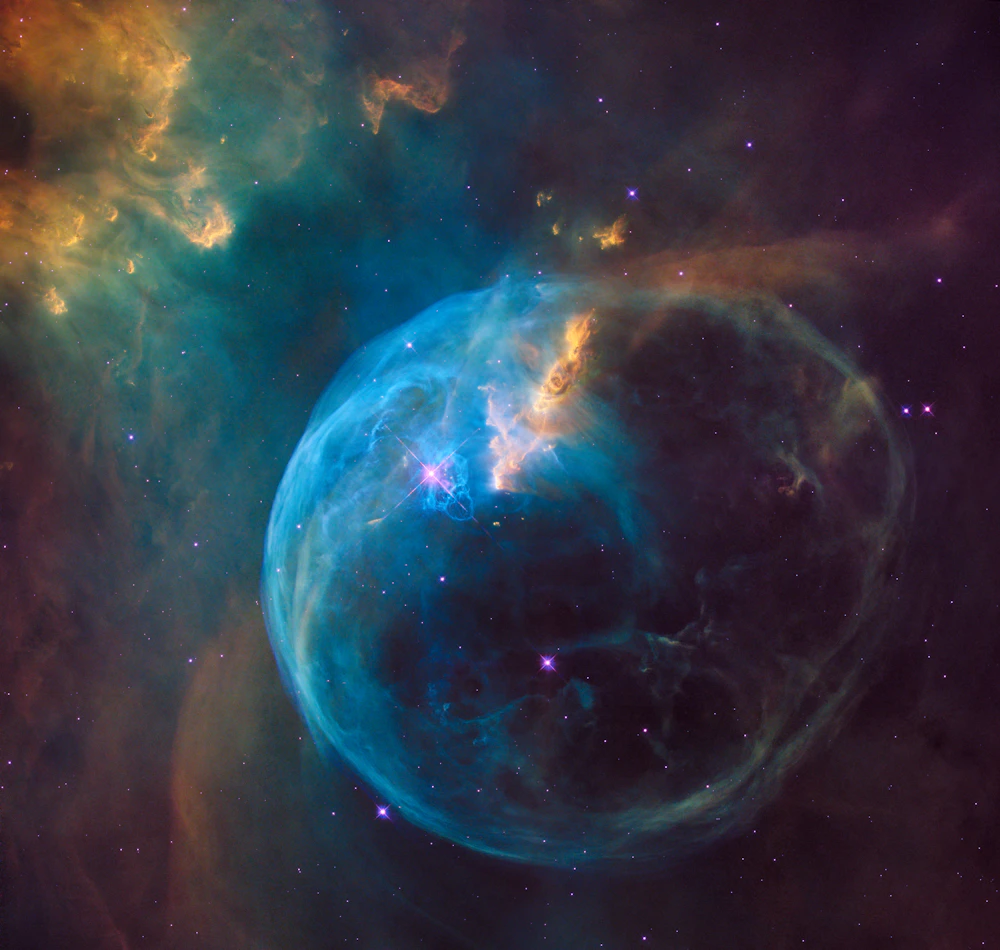
The future of the alien search is not in dusty folders. It is in new telescopes, new robots, and new eyes.
Part Seven: The Human Takeaway Why This Story Matters
We have now traveled from the early whispers of a "new folder" to the cutting edge of astrobiology. It is time to ask: why does any of this matter? Why did millions of people spend days glued to their screens, hoping for proof of aliens? And why does the lack of such proof feel, to some, like a letdown?
The answer lies deep in human psychology. We are pattern-seeking, meaning-making creatures. Our ancestors saw faces in the clouds and gods in the thunder. We see spaceships in sensor glitches. The unknown terrifies us, but it also excites us. The possibility that we are not alone that there is someone or something else out there taps into our oldest hopes and fears. It promises an end to loneliness, a new perspective on our own problems, and a future that is larger than the daily grind.
The "folder" story matters because it is a mirror. It shows us how we react to ambiguity. Some of us immediately fill the gaps with the most sensational explanation. Others retreat into rigid skepticism, refusing to believe anything without overwhelming evidence. The healthiest approach, the one modeled by NASA's scientists, is to remain open but demanding: yes, it could be aliens, but we need more data. And then to go out and get that data.
In a world of deepfakes, conspiracy theories, and information chaos, the ability to hold two thoughts in mind at once "this is intriguing, but it is not proof" is a kind of superpower. The UAP folder gives us a chance to practice that superpower. It trains us to look at evidence without leaping to conclusions. It reminds us that science is a process, not a revelation.
Perhaps most importantly, the folder story is a testament to the bravery of transparency. For decades, governments hid behind classified stamps, feeding the very conspiracy theories they claimed to dismiss. Now, with this release, the US government has said, in effect: "Here is all we have. It is messy, incomplete, and puzzling. But it is yours to examine." That act of trust, extended to the public, is a significant step forward in the relationship between citizens and their institutions.
So, where do we go from here? We continue to look up. We continue to ask questions. We support missions like the Habitable Worlds Observatory and EELS. We fund astrobiology research. And we remain humble, knowing that the universe is under no obligation to make sense to us in our lifetimes. The search for life beyond Earth is a marathon, not a sprint. The folder is just one water station along the way.
Conclusion: The Silence Is Not Empty
The "new folder" from NASA is now open. Its contents have been analyzed, debated, meme-ified, and mostly but not entirely explained. The verdict, reached after thousands of hours of collective scrutiny, is this: there is no definitive proof of alien life in the folder. But there is ample evidence that we do not yet know everything about the skies above us and the space around us. There are legitimate mysteries waiting to be solved.
And that, paradoxically, is the most hopeful outcome. Because if the folder had contained a clear photograph of an alien spacecraft, the mystery would be over. The search would end. We would have answers, but we would lose the questions. Instead, we have both: new questions arise from old data, and the search continues with renewed energy.
Let us give the final word to the late astronomer Carl Sagan, who understood the human longing for contact better than anyone. In his novel "Contact," he wrote: "The universe is a pretty big place. If it's just us, it seems like an awful waste of space." Sagan was right. The silence of the cosmos is not empty; it is full of potential. Every photon that reaches our telescopes, every strange blip on a radar screen, every astronaut's exclamation of surprise these are invitations to look deeper, to think harder, and to never stop wondering.
The folder is closed, but the search is open. And you, reading these words, are part of it. Keep looking up. The truth is out there, waiting to be found not in a folder, but in the patient, cumulative work of science and the unquenchable human spirit.
What will tomorrow bring? We don't know. But we are watching.
The search for life beyond Earth is the most human thing we do. It is the question that contains all others.