THE ECONOMIC CHRONICLE - Special In‑Depth Report
The United States Economy in 2026: Resilience, Reinvention, and the Great Structural Shift
The American economy at mid‑2026 is a breathtaking paradox. The unemployment rate hovers near historic lows, real GDP expands above 2.5%, and corporate earnings repeatedly break records. Yet beneath these triumphal headlines churn a housing market frozen by mortgage lock‑in, the earliest seismic waves of the AI productivity shock, a fiscal trajectory that terrifies bond vigilantes, and an inflation battle whose final mile has become a marathon of centimeters. This is not a normal business cycle - it is a rewiring of the economic engine itself.

The Macro Picture: A Soft Landing That Defied Every Textbook
The recovery from the COVID‑19 recession has become a case study that will require a complete rewrite of macroeconomics textbooks. Following $5.3 trillion in fiscal stimulus and the Federal Reserve’s most aggressive tightening campaign in four decades - lifting the federal funds rate from near zero to 5.5% between 2022 and 2023 - the overwhelming consensus among forecasters was that a painful recession was unavoidable. Instead, the United States delivered what analysts now reverently call the “immaculate disinflation.” The Consumer Price Index, which had peaked at an alarming 9.1% in June 2022, retreated to approximately 2.8% by the spring of 2026. Remarkably, this occurred while the labor market added an average of 190,000 jobs per month through the first half of the year, and real GDP grew at 2.7% in 2025, on track for 2.4% in 2026 according to the Congressional Budget Office.
This rare simultaneity - falling inflation without a corresponding spike in joblessness - has forced central banks globally to reconsider the Phillips curve, the foundational trade‑off model that dominated macroeconomics for fifty years. The secret, many economists now argue, lay in a confluence of supply‑side healing: untangled supply chains, a surge in prime‑age labor force participation, and a productivity dividend that may have arrived earlier than data could capture. The result is an economy that feels both buoyant and brittle.
Consumers remain the primary engine of this expansion. Household balance sheets, fortified by record home equity and a stock market that repeatedly reaches all‑time highs, continue to fuel spending on services, travel, and experience‑based consumption. The personal saving rate has inched up to 4.2%, revealing a cautious optimism rather than the exhaustion that typically follows prolonged spending binges. Business fixed investment - driven overwhelmingly by the semiconductor and clean‑tech manufacturing boom - surged 6.1% year‑over‑year in the first quarter of 2026, confirming that the factory‑building renaissance is translating into actual productive capacity and not merely a construction mirage.

The Inflation Endgame: Why the Last Mile Is the Longest
Headline inflation has fallen dramatically from its 2022 zenith, yet the final descent to the Federal Reserve’s sacrosanct 2% target has proved agonizingly slow. The core Personal Consumption Expenditures (PCE) price index, the central bank’s preferred inflation gauge, remains stubbornly lodged at 2.6% as of March 2026. The primary culprit is shelter. The Bureau of Labor Statistics’ methodology for owners’ equivalent rent - a construct that represents nearly a quarter of the CPI basket - inherently lags real‑time market rents by twelve to eighteen months. Although private data from Zillow and Apartment List indicate that new lease rents are rising at only 1.5% year‑over‑year, the official shelter index continues to climb at a 4.8% annual rate, injecting a substantial and artificial stickiness into the headline figures. Fed Chair Jerome Powell has publicly acknowledged this “residual inertia,” cautioning that any further easing will be contingent on a sustained deceleration in services inflation excluding housing - the so‑called supercore measure.
New price pressures are simultaneously emerging from the green transition. The electrification of everything - vehicles, residential heating, industrial processes - has driven copper prices to $5.20 per pound and lithium carbonate to $38,000 per metric ton by mid‑2026. These raw material costs inexorably filter into consumer durable goods, establishing a climate‑driven floor under inflation that monetary policy alone cannot address. Geopolitical instability in the Middle East and persistent trade frictions with China periodically inject energy price spikes, serving as a sharp reminder that global supply chains, while less tangled than in 2021, remain inherently fragile and prone to disruption.

The Federal Reserve’s High‑Wire Act: Timing the Pivot
The Federal Open Market Committee entered 2026 with the federal funds rate still perched in the 5.25%–5.50% range. Financial markets had exuberantly priced in six quarter‑point cuts by December, but the actual pace has been glacial. By June, only two reductions have materialized, nudging the target to 4.75%–5.0%. The hesitation reflects a deeply divided committee. Dovish members emphasize cooling wage growth and the mechanical shelter lag as justification for a more aggressive easing cycle; hawks counter that the “no‑landing” scenario - in which growth re‑accelerates and inflation reignites - remains a live risk, given the immense wealth effect generated by record equity valuations and housing prices. The neutral rate of interest, r‑star, is now estimated by the New York Fed at 2.8% in real terms, up sharply from 1.5% before the pandemic. This implies that the current nominal policy stance is less restrictive than it appears, and that the runway for rate cuts without sparking overheating is narrower than conventional wisdom suggests.
Behind the scenes, quantitative tightening continues apace, reducing the Fed’s balance sheet by $35 billion per month. The runoff of Treasury and mortgage‑backed securities has thus far been orderly, but the Treasury’s own voracious borrowing requirements - driven by a $1.8 trillion annual deficit - are beginning to test the market’s absorptive capacity. The spread between overnight repo rates and the Secured Overnight Financing Rate has flickered episodically, reviving uneasy memories of the September 2019 funding squeeze. The Fed is acutely aware that a disorderly end to balance sheet normalization could force an embarrassing and economically damaging policy reversal.

The Labor Market Metamorphosis: Hoarding, Hybrid, and the Fractional Workforce
America’s labor market has become a landscape of striking contradictions. The headline unemployment rate of 3.7% masks an extraordinary divergence in lived experience. Prime‑age labor force participation has recovered to 83.5%, the highest level since 2002, propelled by the re‑entry of women and older workers. Yet the number of discouraged workers who have stopped searching altogether has crept up by 400,000 over the last six months, a signal that the low official unemployment rate partly reflects a shrinking active labor pool. The quits rate - a reliable barometer of worker confidence - has settled at 2.3%, down from the 3.0% frenzy of the Great Resignation but still comfortably above the 2019 average, confirming that employees retain meaningful, if diminished, bargaining power.
Wage growth has moderated to 4.1% year‑over‑year, but that aggregate figure conceals dramatic gains at the bottom of the distribution. Workers in leisure and hospitality, retail, and logistics have seen cumulative pay increases of 28% since 2019, comfortably outpacing inflation. This compression at the lower end is quietly reshaping the income distribution and has contributed to the first genuine decline in the Gini coefficient since the 1990s. Simultaneously, the “fractional workforce” - freelancers, gig workers, fractional executives, and independent contractors - now represents an estimated 22% of all U.S. workers, up from 16% in 2019 according to Upwork and McKinsey. This structural shift raises urgent and unresolved policy questions about portable benefits, retirement security, and whether the very concept of “unemployment” as measured by the household survey remains fit for purpose.
Labor hoarding has emerged as a deliberate corporate strategy. Scarred by the traumatic staffing shortages of 2021‑2022, employers in manufacturing, healthcare, and professional services are retaining workers even when demand in specific divisions softens. This practice has cushioned overall employment but has also artificially depressed measured productivity, creating a frustrating puzzle for forecasters attempting to gauge the economy’s true productive potential. The tension between hoarded labor and the coming AI substitution wave is the great unresolved human capital equation of the decade.
The Housing Market: An Affordability Crisis Frozen in Place
No sector illustrates the economy’s bipolar nature more starkly than housing. The National Association of Realtors reports that existing‑home sales in April 2026 limped along at a seasonally adjusted annual rate of just 4.1 million units - near the lowest level since the depths of the 2010 housing bust. The culprit is the now‑infamous “mortgage rate lock‑in effect”: over 70% of outstanding mortgages carry interest rates below 4%, and homeowners are rationally unwilling to sell and acquire a new loan at 6.8%. The resulting inventory paralysis has pushed the median existing‑home price to $419,300, up 4.5% from a year earlier, even as demand has visibly contracted. This is a market frozen not by a lack of desire to move, but by a mathematical trap that has ensnared millions of households in their own homes.
The pain is overwhelmingly concentrated among first‑time buyers and Generation Z. The typical down payment now exceeds $56,000 - an insurmountable barrier for young households without access to intergenerational wealth. In response, homebuilders have pivoted aggressively, constructing smaller single‑family homes on narrower lots and offering mortgage‑rate buydowns as a standard incentive. Construction starts for attached townhomes and condominiums surged 12% in the first quarter of 2026, but this will not quickly close the 4‑million‑unit structural housing deficit that Freddie Mac estimates. The rental market has provided only partial relief. Nationally, rent growth decelerated to 2.0% annually, but major Sun Belt metros like Phoenix and Las Vegas have experienced rent declines of 1‑2%, while cities such as New York and Boston continue to grapple with 5% annual increases - a regional fragmentation that defies any single federal policy remedy and deepens the geographic sorting of opportunity.

Reindustrialization and the Supply Chain Revolution: Building the New American Factory
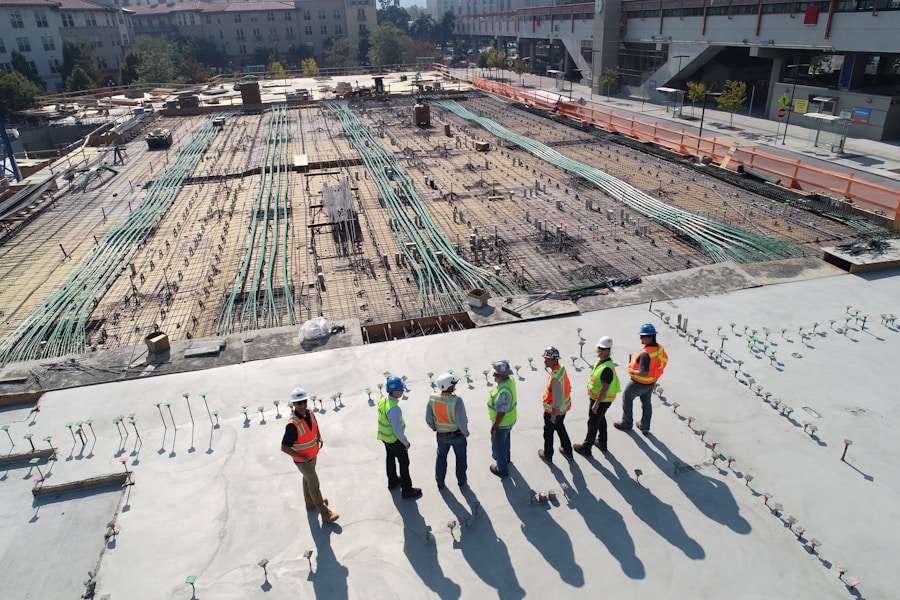
The $280 billion CHIPS and Science Act, in combination with the uncapped clean‑energy tax credits of the Inflation Reduction Act, has ignited a manufacturing renaissance not witnessed since the post‑World War II build‑out. In 2024 and 2025, real construction spending on manufacturing facilities more than doubled compared to the 2010s average. In 2026, factories producing cutting‑edge semiconductors, electric vehicle batteries, solar panels, and advanced pharmaceuticals are transitioning from blueprint to production. Intel’s Ohio mega‑site, TSMC’s Arizona fabs, and Samsung’s expanded Texas operations are on schedule to begin 3‑nanometer chip output later this year, directly creating over 30,000 high‑paying technical positions and tens of thousands more across the supply chain. The economic multipliers of these mega‑projects are immense, with each semiconductor job estimated to support five additional jobs in construction, logistics, and local services.
This reindustrialization is as much a geopolitical imperative as an economic calculation. The United States has aggressively pursued a strategy of “friend‑shoring” and nearshoring, systematically redirecting supply chains toward Mexico, Vietnam, and India while reducing exposure to China. The USMCA trading zone is experiencing a surge in cross‑border investment, and Mexico surpassed China as the top U.S. trading partner in goods for the first time in two decades - a tectonic shift in trade geography. This strategic restructuring, however, carries a clear cost: the input prices for reshored manufacturing are estimated to be 15‑25% higher than offshore production, a premium that inevitably feeds into consumer goods prices and corporate margins. The grand trade‑off between supply chain resilience and cost efficiency will define industrial policy and trade negotiations for the next decade.

The Artificial Intelligence Inflection Point: Productivity Miracle or Displacement Shock
Generative artificial intelligence has accelerated from experimental novelty to enterprise backbone in less than three years. A May 2026 survey by PwC reveals that 67% of Fortune 500 companies have deployed large language models in at least one critical business process - customer service automation, code generation, legal document review, and radiology interpretation being the most common. The productivity implications are staggering and no longer speculative. A rigorous study by the National Bureau of Economic Research documented a 34% increase in output per hour for software developers using AI copilots, and a 25% boost for customer support agents. McKinsey Global Institute now projects that generative AI could add $4.4 trillion annually to the global economy by 2035, with the United States capturing roughly one‑third of that gain due to its deep capital markets and leadership in AI model development.
Yet the labor displacement is real, accelerating, and qualitatively different from prior waves of automation. In the first half of 2026, layoff announcements explicitly citing AI adoption reached 87,000, concentrated in data entry, administrative support, and content creation roles - professions previously considered safely white‑collar. This is still modest relative to the total workforce of 168 million, but the trend line is steep and the direction unmistakable. The job polarization that began in the 2000s - the hollowing out of middle‑skill routine occupations - is now reaching aggressively into cognitive white‑collar work that was long assumed to be immune. The policy response has been fragmented at best. Several states have launched “AI transition funds” that subsidize retraining and portable credentials, but a comprehensive federal strategy remains politically elusive. The increasingly urgent debate revolves around a single question: will the AI productivity surge generate sufficient new categories of human work to offset the displacement, or does this technology truly substitute for human cognition at a scale and pace that breaks the historical pattern?

Consumer Spending: The Bifurcated American Wallet
The divergence in household financial health is one of the most consequential and politically charged trends of 2026. The top two income quintiles, buoyed by asset price appreciation, capital gains, and strong professional services earnings, continue to drive record demand for luxury travel, fine dining, and high‑end real estate. Delta Air Lines reports all‑time high premium cabin bookings; luxury car sales are up 8% year‑over‑year. Meanwhile, the bottom 40% of earners have exhausted the excess savings accumulated during the pandemic. Data from the Federal Reserve Bank of New York shows that credit card balances have swollen to a record $1.23 trillion, and the share of balances transitioning into serious delinquency - 90 or more days past due - has climbed to 6.5%, surpassing the 2019 pre‑pandemic peak.
“Buy now, pay later” services such as Affirm and Klarna have become embedded in everyday spending, effectively functioning as a new, lightly regulated layer of consumer credit that traditional metrics do not fully capture. Retailers report that 22% of online transactions now utilize these installment platforms. This financial fragility at the bottom explains the persistent “vibecession” - the stubborn gap between strong aggregate economic statistics and gloomy consumer sentiment. The University of Michigan Consumer Sentiment Index, at 68.2 in May 2026, remains far below the 2019 average of 98, reflecting the painful reality that for tens of millions of households, the cumulative 20% increase in the price level since 2020 registers as a permanent and non‑negotiable loss of purchasing power, even if the monthly inflation rate has returned to something approaching normalcy.
The Green Transition: Capex Boom, Grid Strain, and Regional Realignment
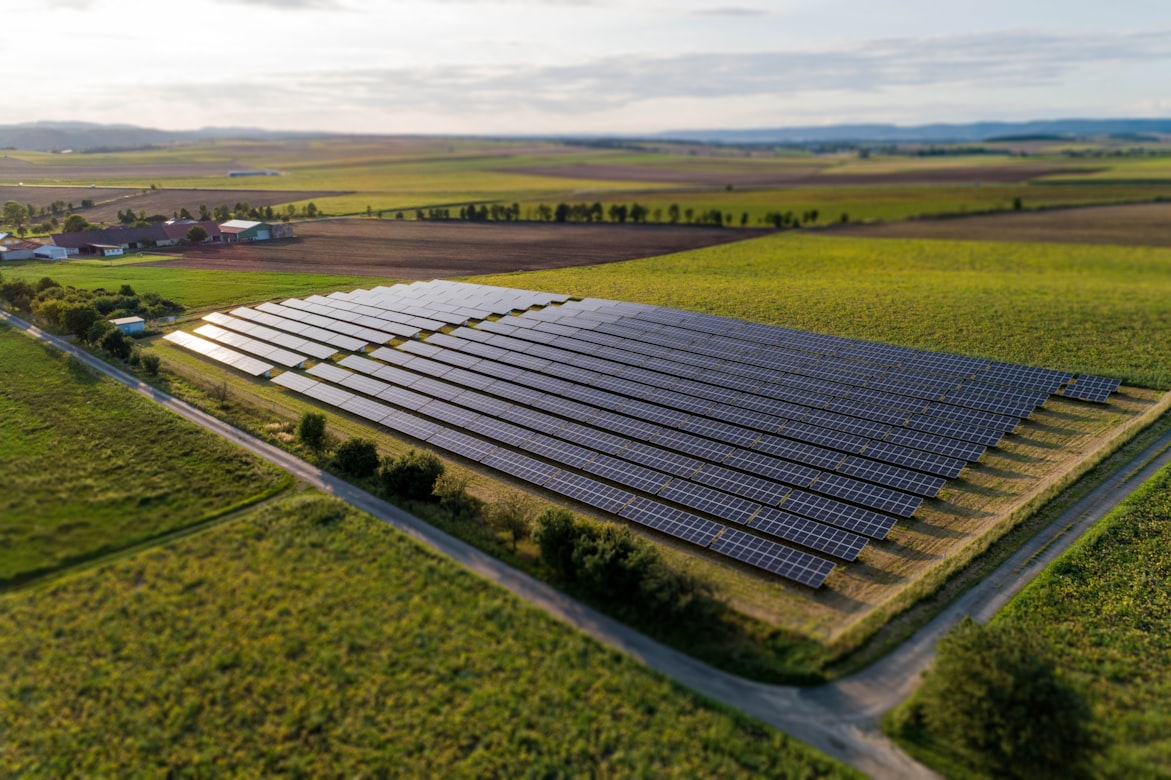
The energy transition has matured into a macroeconomic force on par with housing and technology. In 2025, clean energy investments in the United States surpassed $141 billion, a 17% increase from 2024, according to BloombergNEF. Solar installations reached 38 gigawatts of new capacity, battery storage deployment quadrupled, and electric vehicle sales surpassed 1.5 million units, now representing 11% of all new car sales. This is not merely an environmental achievement; it is an industrial transformation. The grid, however, is straining under the load: electricity demand, which had been flat for a decade, grew 3.2% in 2025 and is projected to surge another 3.8% in 2026, driven by data centers, EVs, and electrified manufacturing. The Department of Energy warns that the U.S. will need to double its transmission capacity by 2035, a feat requiring $700 billion in investment and a politically contentious overhaul of permitting processes.
The green transition is also redrawing the economic map. The “Battery Belt” stretching from Michigan to Georgia has welcomed an influx of 82,000 manufacturing jobs, reversing decades of decline in some Rust Belt communities. In stark contrast, regions dependent on fossil fuel extraction - parts of West Texas, Wyoming, and the Gulf Coast - face an uncertain future, even as natural gas exports boom to meet European and Asian demand. The Inflation Reduction Act’s uncapped tax credits have made the U.S. the most attractive destination for clean‑tech capital in the world, but the resulting fiscal cost - now conservatively estimated at over $1.2 trillion over a decade - is contributing to the ballooning federal deficit and has become a growing point of partisan political contention.

Financial Markets: Concentration Risk and the Private Credit Shadow
The S&P 500 has delivered a spectacular 22% total return over the past twelve months, but the gains have been extraordinarily narrow. The ten largest stocks - dominated by Apple, Microsoft, Nvidia, Amazon, Alphabet, and a few other mega‑caps - now account for 34% of the index’s total market capitalization, a concentration that surpasses the peak of the dot‑com bubble in 2001. Nvidia alone, riding the insatiable demand for AI infrastructure, has become a $3.8 trillion company, its earnings growth justifying a valuation that would have seemed absurd only two years ago. Yet the risk is palpable: any disappointment in AI monetization, any shift in the narrative around chip demand, could trigger a swift and brutal correction that would reverberate through retirement accounts, consumer confidence, and the broader economy.
Beyond the public markets, the private credit industry has swelled to $2.1 trillion in assets under management, stepping into the void left by regional banks that pulled back from commercial real estate and middle‑market lending in the wake of the 2023 banking turmoil. Regulators at the Financial Stability Oversight Council have flagged the opacity and leverage in this sector as a potential systemic risk. The commercial real estate market, especially older office buildings in central business districts, remains under severe and unrelenting stress. Delinquency rates on office CMBS loans reached 8.9% in early 2026, and a wave of maturing loans through 2027 threatens a slow‑burning crisis that could further dent regional bank balance sheets and force a painful, long‑overdue conversion of obsolete office towers to residential or mixed‑use - a process only just beginning in cities like San Francisco and Washington D.C.

Fiscal Fraying and the Inequality Trap
Federal debt held by the public now exceeds $29 trillion, pushing past 106% of GDP. Net interest payments have ballooned to $1.1 trillion annually, surpassing both defense spending and Medicare, making interest the second‑largest line item in the federal budget after Social Security. The Congressional Budget Office projects that, under current law, the deficit will average $1.9 trillion over the next five years, propelling the debt‑to‑GDP ratio to 122% by 2031. Political polarization has rendered any grand fiscal bargain unimaginable, and the 2025 debt limit standoff required extraordinary Treasury measures for three months before a temporary suspension was hastily agreed to. The U.S. dollar’s global dominance - still accounting for 58% of central bank reserves - allows this borrowing to continue at relatively low rates, but the trajectory is unsustainable, and any loss of confidence could trigger a fiscal crisis that would make 2008 look mild.
Simultaneously, the wealth gap has widened further during the post‑pandemic expansion. The top 1% of households now control 32% of total U.S. wealth, while the bottom 50% hold just 2.6%. The racial wealth gap remains cavernous: the median Black household has $28,000 in net worth compared to $250,000 for the median white household, a ratio that has barely budged in a decade. Policy responses are becoming bolder. Baby bond proposals - publicly funded trust accounts for every newborn, scaled by family income - have been adopted in Connecticut and are under active consideration in several other states. A federal framework for portable gig‑worker benefits passed the House but stalled in the Senate. The central economic challenge of the era remains: how to make growth inclusive without sacrificing the dynamism that generates it.

Outlook: Navigating the Polycrisis with Agile Pragmatism
The U.S. economy at mid‑2026 is a study in managed resilience and pervasive uncertainty. The consensus forecast expects growth to decelerate gently to around 2.0% in 2027, inflation to finally touch 2.2%, and the unemployment rate to rise modestly to 4.2%. But the distribution of risks around this central path is extraordinarily wide. The AI productivity shock could turbocharge growth and corporate profits, or it could unleash a wave of dislocation that overwhelms social safety nets. A sudden repricing of commercial real estate could cascade into a credit crunch that freezes lending. A geopolitical escalation, particularly in the Taiwan Strait, would sever semiconductor supply and plunge the entire global economy into a severe recession. The federal fiscal path is unsustainable in plain sight, yet bond markets have not yet demanded a significant risk premium - a complacency that cannot last indefinitely.
What is certain is that the American economy is being remade in real time. The great forces of technology, demography, decarbonization, and deglobalization are converging with an intensity not seen since the Industrial Revolution. The institutions, assumptions, and policy frameworks of the post‑Bretton Woods era are being stress‑tested daily. For businesses, investors, and households, the imperative is agility, continuous learning, and a willingness to discard outdated mental models. The United States retains immense structural advantages: deep and liquid capital markets, a deeply embedded culture of innovation, demographic vitality relative to other advanced economies, and the unmatched privilege of issuing the world’s primary reserve currency. Whether those advantages translate into broad‑based, sustainable prosperity depends on the foresight and courage of decisions made in boardrooms, on Capitol Hill, and at the Marriner Eccles Building in the months and years ahead.
Glossary of the 2026 Economic Lexicon
Soft Landing: A scenario in which the Federal Reserve tightens monetary policy enough to curb inflation without causing a recession.
Immaculate Disinflation: The rare phenomenon of inflation falling significantly without a corresponding rise in unemployment - the economic equivalent of a unicorn.
Shelter Lag: The long delay between changes in real‑time market rents and their reflection in official inflation measures, currently keeping reported inflation artificially elevated.
AI Productivity Paradox: The tension between measurable micro‑level productivity gains from artificial intelligence and their still‑uncertain macro‑level impact on aggregate output and employment.
Labor Hoarding: A corporate strategy of retaining workers even when demand softens, to avoid the cost and pain of rehiring - a scar from the 2021‑2022 staffing crisis.
Nearshoring / Friend‑Shoring: The strategic relocation of supply chains to nearby or politically allied countries (e.g., Mexico, Vietnam) to reduce geopolitical dependency.
Green Capex Boom: The massive wave of capital expenditure in renewable energy, battery storage, and electrification, supercharged by the Inflation Reduction Act.
Mortgage Rate Lock‑In: The phenomenon where homeowners with ultra‑low mortgage rates refuse to sell, freezing the housing market and starving it of inventory.
Fractional Workforce: The growing segment of freelancers, gig workers, and fractional executives who operate outside traditional full‑time employment structures.
Neutral Rate (r‑star): The real interest rate that neither stimulates nor restricts the economy - now believed to be significantly higher than in the pre‑pandemic decade.
Vibecession: A colloquial term for the disconnect between strong economic data and persistently negative consumer sentiment, driven by cumulative price level increases.
Private Credit: Lending by non‑bank institutions (private credit funds) that has grown explosively as banks retreat from certain markets, raising systemic opacity concerns.
Baby Bonds: A policy proposal to give every newborn a publicly funded trust account scaled to family income, designed to close the racial and generational wealth gap.
Polycrisis: A situation in which multiple, interrelated economic, geopolitical, and environmental risks compound one another, creating a threat greater than the sum of its parts.