THE MANGA CHRONICLE - Special Feature
The Heroes We Grew Up With: A Human Story of Shōnen Manga
From ink-smudged pages in Meiji-era magazines to the glowing screens of a global digital empire, shōnen manga has spent over a century shaping dreams, forging friendships, and teaching millions the power of never giving up. This is its complete story—every generation, every icon, every battle cry.
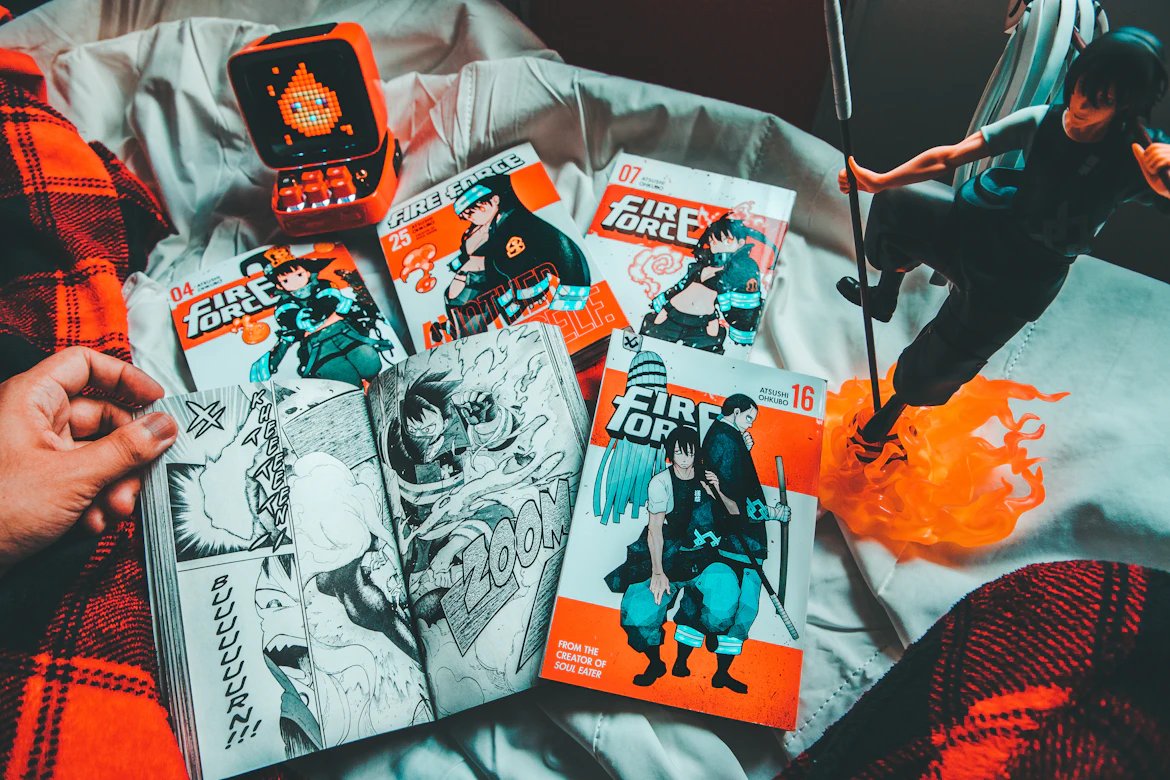
A Universe in a Magazine: What Shōnen Manga Really Means
Shōnen manga (少年漫画) is far more than just comics for teenage boys. It is a cultural powerhouse that has shaped global entertainment for well over a century. The genre's roots stretch back to the 1890s, when Japanese children's magazines first began segmenting content by age and gender, creating a dedicated space for young male readers. From these humble beginnings, shōnen manga has evolved into a multi-billion-dollar industry that launches iconic characters, drives tourism, inspires fashion collaborations, and brings together millions of fans across the world. In 2026, the global anime market is valued at approximately $31.39 billion and is projected to reach $48.47 billion by 2030, while the manga market itself has surged from $16.28 billion in 2025 toward an expected $34.73 billion within the same period. This staggering growth reflects not only the creativity of Japanese artists but also the deep emotional connections forged between readers and stories of friendship, perseverance, and adventure. From the pioneering work of Osamu Tezuka in the 1950s to the global box-office triumph of Demon Slayer: Kimetsu no Yaiba - Infinity Castle in 2025, shōnen manga has continually reinvented itself while staying true to its core values. This article explores the complete history, evolution, cultural footprint, business landscape, and future trends of shōnen manga, providing a detailed and up-to-date resource for fans, creators, and marketers alike.
The term “shōnen” simply means “young boy” in Japanese, yet the category encompasses an extraordinarily wide range of storytelling styles. While action, adventure, and fighting remain central, modern shōnen magazines also publish romance, comedy, horror, sports, and slice-of-life narratives. The common thread is a focus on protagonist growth, moral challenges, and the bonds between characters. This emotional core, combined with spectacular artwork and inventive world-building, has allowed shōnen manga to transcend its original demographic. Today, readers of all ages, genders, and nationalities eagerly follow the latest chapters of One Piece, Jujutsu Kaisen, My Hero Academia, and countless other series. The arrival of simulpub digital platforms, anime streaming services, and theatrical film releases has further accelerated global consumption, making shōnen manga one of the most influential pop-culture forces on the planet.
Understanding shōnen manga requires looking at its historical evolution, the industrial structures that support it, the cultural impact it has achieved, and the trends that will shape its future. Along the way, we will encounter the iconic series that defined generations, the business models that fuel creativity, the labor challenges that threaten sustainability, and the strategies that content creators can use to engage a massive online audience. Whether you are a longtime fan, a newcomer curious about where to start, or a digital marketer seeking to optimize manga-related content, this article offers an exhaustive guide to the world of shōnen manga in 2026. The discussion integrates trending SEO keywords and popular hashtags such as #anime, #manga, #animeart, #otaku, best manga 2026, Gachiakuta, Kodansha Manga Awards, anime market size, and manga industry trends, all woven naturally into a comprehensive narrative.

The Origins of Shōnen Manga (1895-1945)
The birth of shōnen manga is inseparable from the rise of Japanese children's magazines in the late nineteenth century. In the 1890s, as Japan modernized and its publishing industry expanded, publishers began to produce periodicals explicitly aimed at young boys. These early shōnen magazines were not comic anthologies in the modern sense; they contained illustrated stories, educational articles, serialized fiction, and only gradually incorporated sequential art. The earliest shōnen manga, appearing around 1895, drew heavily on themes of adventure, honor, and national pride, mirroring the ambitions of the Meiji era. Stories of brave samurai, daring explorers, and victorious soldiers filled the pages, instilling moral lessons while entertaining. The visual style was influenced by traditional Japanese art forms such as kibyōshi and ukiyo-e, as well as Western-style cartoons that were beginning to circulate. This hybrid visual language would become a defining characteristic of manga.
Through the Taishō period (1912-1926) and into the early Shōwa era, shōnen magazines grew in both circulation and influence. Titles like Shōnen Club, launched in 1914, became cultural institutions. While still text-heavy, these magazines increasingly featured multi-panel comic strips and serialized graphic stories. The narrative template that still defines shōnen was already taking shape: a young protagonist faces formidable challenges, grows stronger through training and friendship, and ultimately triumphs over evil. These early stories emphasized self-discipline, loyalty, and the importance of community—values that resonated deeply with a society undergoing rapid change. By the 1930s, shōnen manga had become a staple of Japanese boyhood, but the looming war would soon reshape the entire industry.
During World War II, paper shortages and government censorship severely restricted manga production. Yet even in this difficult period, the seeds of post-war revival were being planted. Artists who would later become giants of the industry, including Osamu Tezuka, were honing their skills and developing the cinematic storytelling techniques that would revolutionize manga after the war. The war's end in 1945 opened a new chapter, as a defeated and occupied Japan sought new forms of expression and escapism. The stage was set for the modern manga explosion.
The Post-War Boom and the Birth of Modern Shōnen (1945-1960s)
In the aftermath of World War II, Japan was a nation in ruins, but its appetite for affordable entertainment was immense. Manga, cheap to produce and easy to distribute, became the perfect medium for a populace hungry for stories. Young boys, in particular, flocked to the new manga magazines that sprang up in the late 1940s. In 1947, Ken'ichi Katō founded Manga Shōnen, a pioneering magazine that gave the genre its name and provided a platform for emerging talents. This period also saw the appearance of rental manga (kashihon), which allowed readers to borrow comics for a small fee, further expanding access. The content of shōnen manga shifted dramatically toward topics that fascinated the archetypal boy: science fiction, robots, space travel, and heroic action-adventure.
The single most important figure of this era was Osamu Tezuka (1928-1989), often called the “God of Manga.” Tezuka's work transformed shōnen manga from simple, static strips into dynamic, emotionally complex narratives. His 1952 serial Astro Boy (Tetsuwan Atomu) introduced cinematic panel layouts, dramatic close-ups, and a depth of character that had never been seen before in comics. The story of a robot boy with human emotions who fights for justice captured the imagination of a generation and established the pattern of manga-to-anime adaptation that remains the industry's backbone. Astro Boy's anime version, which aired in 1963, was Japan's first weekly television animation series and became a global phenomenon, airing in dozens of countries and introducing millions to Japanese storytelling.
Tezuka's influence extended far beyond Astro Boy. His 1960 manga My Sun Wukong was adapted into the feature film Saiyūki (Alakazam the Great), solidifying the symbiotic relationship between manga and animation. He also pioneered the “story manga” format, in which a single long-form narrative unfolds over thousands of pages, allowing for deep character development and intricate plotting. This approach became the standard for shōnen series, from Dragon Ball to One Piece. Tezuka's studio system and his emphasis on artist-driven vision shaped the entire industry, even as he notoriously accepted low licensing fees, a practice that would have long-term consequences for creator compensation.
Another transformative development was the rise of weekly manga anthologies. On March 17, 1959, two publishing giants—Kodansha and Shogakukan—simultaneously launched Weekly Shōnen Magazine and Weekly Shōnen Sunday. These thick, phone-book-sized magazines packed with a dozen or more serialized chapters revolutionized the market. For a low price, readers could sample multiple stories each week, and the editors could quickly gauge popularity through reader surveys. Series that failed to connect with the audience were canceled, while hits could run for years. This hyper-competitive environment spurred creators to craft ever-more-engaging stories, driving the quality and diversity of shōnen manga to new heights. By the end of the 1960s, shōnen manga had diversified well beyond pure action. Works like Tomorrow's Joe (Ashita no Joe) brought gritty social realism to the genre, while Doraemon (1969) proved that a robot-cat from the future could charm readers of all ages with its blend of humor and heart.

The Golden Age: Dragon Ball, Shōnen Jump, and Global Expansion (1980s-1990s)
If the post-war years laid the foundation, the 1980s and 1990s built the skyscraper. This era gave birth to the most iconic shōnen franchises, series that would sell hundreds of millions of copies worldwide and introduce anime to international audiences on an unprecedented scale. Central to this explosion was the rise of Weekly Shōnen Jump, the magazine that became the unrivaled king of manga. Launched in 1968 by Shueisha, Jump's circulation soared during the 1980s and 1990s, peaking at over 6.5 million weekly copies in 1995. The magazine's editorial philosophy—friendship, effort, victory—perfectly captured the spirit of shōnen and resonated with millions of readers.
No series exemplifies the golden age more than Akira Toriyama's Dragon Ball, serialized from 1984 to 1995. Initially a whimsical adventure loosely based on the Chinese classic Journey to the West, Dragon Ball evolved into an action-packed martial arts epic featuring planet-destroying battles, transformative power-ups, and a lovable cast of warriors. Its anime adaptation became a global juggernaut, airing in over 80 countries and turning characters like Goku and Vegeta into household names. Dragon Ball's “battle shōnen” template—training arcs, tournament competitions, escalating power levels, and a never-ending quest for self-improvement—became the blueprint for generations of successors.
Alongside Dragon Ball, other landmark series of the period included Fist of the North Star (1983-1988), which combined post-apocalyptic action with a deeply emotional story of love and loss; Saint Seiya (1986-1990), which fused Greek mythology with armored warriors and global popularity; and JoJo's Bizarre Adventure (1987-present), a multi-generational saga celebrated for its flamboyant art, inventive powers, and enduring cultural influence. Each of these titles pushed the boundaries of what shōnen could achieve artistically and commercially.
The late 1990s and early 2000s saw the emergence of what fans call the “Big Three”—the three shōnen series that would dominate global manga sales and anime viewership for over a decade. Eiichiro Oda's One Piece, which began serialization in 1997 and continues to this day, is the highest-selling manga of all time, with over 500 million copies in circulation worldwide. Its tale of Monkey D. Luffy's quest to become the Pirate King embodies shōnen themes of friendship, freedom, and relentless perseverance. Masashi Kishimoto's Naruto (1999-2014) introduced readers to a world of ninjas and explored profound themes of isolation, acceptance, and the cycle of hatred, becoming a cultural ambassador for anime in the West. Tite Kubo's Bleach (2001-2016) brought stylish character designs and a supernatural action aesthetic that attracted a massive international following. Together, the Big Three solidified shōnen manga's status as a global entertainment phenomenon.
The Digital Revolution and the New Millennium (2000s-2010s)
The turn of the millennium brought profound changes to how shōnen manga was created, distributed, and consumed. Digital platforms began to reshape the industry's economics and dramatically expand its global reach. While print remained dominant in Japan for many years, international audiences increasingly turned to online sources. The launch of official simulpub services—such as Shueisha's Manga Plus and Shonen Jump+, and VIZ Media's digital releases—allowed readers around the world to access new chapters on the same day as their Japanese counterparts. This eliminated the months-long delays that had previously frustrated international fans and fueled rampant scanlation piracy. By 2024, the combined print and digital manga market in Japan reached approximately $4.67 billion, reflecting a steady shift toward screen-based reading.
The digital era also lowered the barriers to entry for aspiring creators. Web-based platforms allowed artists to publish their work directly, bypassing traditional editorial gatekeepers. While shōnen magazines remained the primary path to success, stories that gained popularity online could be picked up by major publishers. The smartphone became the primary reading device for many young manga fans, and vertical-scrolling formats began to influence page layout and pacing. Meanwhile, anime streaming services like Crunchyroll, Funimation, and later Netflix, Amazon Prime, and Disney+ brought shōnen adaptations to vast new audiences, making it possible for a series to become a worldwide hit overnight.
This period also produced a new generation of shōnen hits that built on the legacy of their predecessors while pushing the genre in fresh directions. Hiromu Arakawa's Fullmetal Alchemist (2001-2010) told a tightly plotted, philosophically rich story of two brothers seeking redemption, and is often cited as one of the most perfectly structured shōnen narratives ever created. Hajime Isayama's Attack on Titan (2009-2021), though published in a shōnen magazine (Bessatsu Shōnen Magazine), shattered genre expectations with its dark themes, moral ambiguity, and apocalyptic stakes, demonstrating that shōnen could handle mature, complex subject matter. Kohei Horikoshi's My Hero Academia (2014-present) became a global sensation by blending American superhero tropes with Japanese shōnen values of training, teamwork, and sacrifice, introducing a new generation to the thrill of weekly manga.

The 2020s Renaissance: Demon Slayer, Jujutsu Kaisen, and the Streaming Era
The current decade has been nothing short of a renaissance for shōnen manga and anime. Driven by streaming platforms, record-breaking theatrical films, and a new generation of creators who grew up on the classics, the 2020s have delivered unprecedented commercial success and critical acclaim. Koyoharu Gotouge's Demon Slayer: Kimetsu no Yaiba (2016-2020) became the defining phenomenon of the early 2020s. Its 2019 anime adaptation, produced by Ufotable, captivated audiences with stunning animation and emotional storytelling, and its 2020 theatrical film, Mugen Train, shattered box-office records to become the highest-grossing Japanese film of all time—a title it held until the franchise's own 2025 release, Demon Slayer: Kimetsu no Yaiba Infinity Castle, surpassed ¥100 billion (approximately $670 million) in global revenue, screening in 150 markets worldwide. The film's success demonstrates the immense power of theatrical anime to drive manga sales, merchandise, and global brand recognition.
Gege Akutami's Jujutsu Kaisen has emerged as one of the most dominant shōnen series of the decade. Its manga has become the best-selling series in the United States, with VIZ Media's volumes consistently topping the Circana BookScan charts. In December 2025, multiple Jujutsu Kaisen volumes appeared among the top-selling adult graphic novels, and by February 2026 VIZ Media claimed 14 of the top 20 titles, eight of which were Jujutsu Kaisen volumes. The series' blend of modern horror, intricate combat systems based on cursed energy, and morally complex characters has resonated deeply with a global audience. Its anime adaptation, with a third season adapting the Culling Game arc, remains one of the most anticipated releases in the community.
Tatsuki Fujimoto's Chainsaw Man represents a bolder, darker direction for shōnen. With its raw, often brutal storytelling and a protagonist driven by simple, visceral desires, the series has challenged conventional norms. Its 2022 anime adaptation and a 2025 feature film expanded its fanbase and pushed manga sales to new heights. Meanwhile, Frieren: Beyond Journey's End—although published in a shōnen magazine—proved that contemplative, emotionally resonant fantasy about an elf mage coming to terms with mortality could captivate mainstream audiences. Its second season ranked among the best anime of Winter 2026, demonstrating the hunger for diverse storytelling within the shōnen readership.
Other standout titles of the 2020s include Spy × Family, which brings a spy-comedy-family dynamic to the shōnen category and has become a cross-demographic smash, and Kaiju No. 8, a monster-fighting series that has quickly gained a massive following. The 2026 Kodansha Manga Awards crowned Gachiakuta by Kei Urana as the Best Shōnen Manga, praising its dark fantasy world-building and distinctive art. This new wave of series reflects an industry that is more globally connected, stylistically diverse, and commercially ambitious than ever before.
The Anatomy of a Shōnen Hero: Archetypes and Emotional Resonance
Why do shōnen protagonists resonate so deeply across cultures and generations? The answer lies in a masterful blend of archetypal storytelling and psychological realism. The classic shōnen hero—think Goku, Luffy, Naruto, Tanjiro, or Deku—embodies the "underdog with a dream." He (or increasingly she) starts from a place of weakness, isolation, or ignorance and must undergo grueling training, forge unbreakable bonds, and repeatedly face near-death defeats to grow. This narrative structure mirrors the universal human experience of adolescence: the journey from childhood to adulthood, the search for identity, and the desire to protect those we love. The hero's power-ups are not just physical; they are emotional milestones that signify psychological growth.
Moreover, shōnen heroes possess an almost supernatural capacity for empathy. Luffy doesn't just want to be Pirate King; he wants to free his friends from oppression. Naruto doesn't merely seek to become Hokage; he yearns to bring peace by breaking the cycle of hatred that shattered his own childhood. Tanjiro Kamado fights demons while weeping for their tragic humanity. This combination of boundless ambition and profound compassion creates a magnetic pull for readers. The battles, spectacular as they are, become metaphors for internal struggles—against self-doubt, against societal expectation, against the darkness within. It is this emotional authenticity, wrapped in fantastical spectacle, that transforms a simple comic into a lifelong companion for millions.

Cultural Impact: How Shōnen Manga Changed the World
Shōnen manga's influence extends far beyond entertainment. It has reshaped global pop culture, fashion, sports, and even international diplomacy. Manga conventions like Comiket in Tokyo, Anime Expo in Los Angeles, and Japan Expo in Paris draw hundreds of thousands of attendees annually, generating massive economic activity and fostering cross-cultural exchange. Cosplay—the practice of dressing as manga and anime characters—has become a worldwide subculture, with Instagram and TikTok amplifying its reach. The hashtag #anime alone appears on over 72.5 million Instagram posts, and related tags like #manga (72.5 million posts), #animeart (32.6 million), #animeedits (24 million), #naruto (38.5 million), and #otaku (36.8 million) indicate a staggering level of fan engagement. These numbers reflect not just passive consumption but active participation in a global community.
The economic footprint of shōnen franchises is immense. One Piece has sold over 500 million copies globally, and its multimedia empire spans films, video games, apparel, theme park attractions, and food collaborations. Dragon Ball, Naruto, Demon Slayer, and My Hero Academia each command multi-billion-dollar merchandising businesses. In 2025, the Japanese content industry saw consumer spending reach an average of 85,137 yen (about $570 USD) per person, the highest since records began in 2011, driven in large part by anime and manga. A Dentsu survey found that approximately 30% of global consumers now watch anime, and nearly one-third of those viewers are willing to spend more than $200 on anime and manga merchandise. This spending power has attracted attention from luxury brands; Burberry collaborated with the manga series Blue Period in 2023, creating a limited-edition issue featuring their iconic Lola bag, signaling the convergence of high fashion and manga culture.
Shōnen manga has also become a vehicle for cultural diplomacy. The Japanese government has embraced anime and manga as part of its “Cool Japan” soft power strategy, promoting the country's creative industries abroad. Series like Naruto introduced global audiences to concepts such as chakra, ninjutsu, and the importance of bonds (kizuna). One Piece explores themes of freedom versus authoritarian control, resonating with universal aspirations. Attack on Titan grapples with cycles of violence and prejudice, sparking philosophical debates among its fans. These stories transcend language barriers, creating shared cultural touchstones for generations of readers and viewers across every continent.
The Business of Shōnen: Industry Statistics and Market Trends
The shōnen manga and anime industry is a complex ecosystem involving creators, publishers, animation studios, streaming platforms, and merchandise manufacturers. Understanding its economic scale is essential for anyone analyzing this market. The global anime market was valued at approximately $31.39 billion in 2025 and is projected to grow at a compound annual growth rate (CAGR) of 8.9% to reach $48.47 billion by 2030. The manga market is expanding even faster, from $16.28 billion in 2025 to an expected $34.73 billion by 2030, with a CAGR of 16.3%. In Japan, the combined print and digital manga market reached $4.67 billion in 2024, while the broader animation industry revenue grew by 14.8% year-on-year to reach $25 billion. These figures underscore the sector's robust growth, driven by digital distribution, international expansion, and the increasing integration of manga into mainstream global entertainment.
Despite these impressive numbers, the industry faces a troubling paradox. Many animation studios are struggling financially, and closures have become alarmingly common. In the first nine months of 2025 alone, eight animation studios closed in Japan, with two declaring bankruptcy. This marked the third consecutive year of such losses, and even studios that worked on globally popular series—such as Ekachi Epilka and 3DCG Studio5—were not spared. The root cause is the production committee system, in which multiple sponsors and distributors share the profits while studios are treated as contractors, receiving only one-time production fees. A 2023 survey by the Association of Japanese Animations (AJA) revealed that while the total animation market was worth $22.31 billion, studios received only 13% of that sum, or about $2.848 billion. This financial squeeze leads to overwork, low pay, and a constant shortage of skilled animators. The problem is so severe that prominent creators like Takeru Hokazono have reported sleeping as little as two hours per day to meet deadlines. Unless systemic reforms are implemented, the creative engines behind shōnen manga and anime risk burning out, threatening the long-term health of the industry.
Top Shōnen Manga and Anime of 2026
The year 2026 has already delivered major news for shōnen fans. The prestigious 50th Kodansha Manga Awards honored Gachiakuta by Kei Urana (with Hideyoshi Andou) as the Best Shōnen Manga of the year. The series, which divides its world between the wealthy “Sphere” and the impoverished “Ground,” has been acclaimed for its gritty tone, inventive world-building, and striking art. Other notable nominees included Ichi the Witch, a magical coming-of-age story that subverts genre expectations; Tower Dungeon, a dungeon-crawling fantasy with intricate lore; and Money Forest, a politically charged fantasy exploring tensions between elves and humans. These titles indicate that the shōnen category remains a hotbed of creative innovation.
On the anime front, Spring 2026 brought a wealth of highly rated series. Witch Hat Atelier claimed the top spot in Japanese fan polls for two consecutive weeks, praised for its visual beauty and faithful adaptation. That Time I Got Reincarnated as a Slime Season 4 continued the isekai juggernaut's dominance, while Re:Zero − Starting Life in Another World Season 4 was voted the most anticipated series by Japanese audiences. Returning favorites like Jujutsu Kaisen Season 3 (adapting the Culling Game arc), Frieren Season 2, and One Piece's Elbaf arc kept fans eagerly tuning in. The sheer diversity of content—from dark fantasy to comedic isekai to soulful drama—illustrates how broad the shōnen umbrella has become.
Sales charts continue to be dominated by legacy titles. One Piece retained its #1 position in IP power rankings for the second consecutive year, a testament to Eiichiro Oda's unrivaled storytelling stamina. Jujutsu Kaisen volumes maintain their stranglehold on Western sales charts, while Demon Slayer remains a perennial bestseller boosted by each new theatrical film. These series not only sell millions of copies but also generate enormous social media buzz, fueling hashtags and fan communities that keep the franchises alive between official releases.
The Shōnen Reader: Demographics Beyond the Stereotype
While the name "shōnen" targets young boys, reality paints a far more inclusive picture. Surveys and sales data reveal that a significant percentage of shōnen manga readers are female, and the median age of fans is rising. In Japan, women now account for a substantial portion of Weekly Shōnen Jump's readership, drawn by character relationships, emotional depth, and compelling storytelling. Globally, the fandom is diverse: teenagers, university students, working adults, and even seniors follow long-running series. The shift is fueled by digital accessibility and the universal themes of struggle and camaraderie. Shōnen manga has quietly become a family affair, with parents who grew up on Dragon Ball and One Piece now introducing those same stories to their children.
This broad audience has encouraged publishers to serialize stories that blur demographic lines. Works like The Promised Neverland (which ran in Weekly Shōnen Jump) featured a female protagonist and psychological horror, while Spy × Family combines espionage action with domestic comedy that appeals to all ages. The genre's evolution reflects a simple truth: a great story is ageless and genderless. As a result, the term "shōnen" is increasingly understood as a narrative tradition rather than a strict demographic box.

SEO Strategies for Manga and Anime Content in 2026
For website owners, bloggers, and digital marketers in the anime and manga space, understanding search engine optimization (SEO) is critical to capturing organic traffic in a competitive niche. The most effective content strategies combine in-depth information with careful keyword integration, structured data, and multimedia elements such as images with descriptive alt text. High-volume keywords like “manga,” “anime,” “best manga 2026,” “Kodansha Manga Awards 2026,” and “anime market size 2026” form the core of many successful articles, but long-tail keywords often deliver better conversion rates. Phrases such as “best shonen manga for beginners 2026,” “how to start reading One Piece in 2026,” “Gachiakuta manga review 2026,” “manga sales statistics 2025 vs 2026,” and “Japanese anime industry labor crisis 2026” target specific user intents and face less competition.
Social media signals are also increasingly important for SEO. The most popular manga/anime hashtags in 2026 include #anime (72.5 million Instagram posts), #manga (72.5 million), #animeart (32.6 million), #animeedits (24 million), #animegirl (26.5 million), #naruto (38.5 million), #otaku (36.8 million), and #digitalart (160.7 million). Incorporating these hashtags into social promotion, while also using them naturally in blog content, can improve discoverability. Google's algorithms also favor pages that demonstrate expertise, authority, and trustworthiness (E-E-A-T). Citing authoritative sources such as market research reports from The Business Research Company, industry surveys from AJA, and data from Teikoku Databank signals credibility. Regularly updating content to reflect the latest news—such as new award winners or record-breaking box-office figures—further boosts rankings, as freshness is a known ranking factor.
On-page SEO best practices include using clear heading hierarchies (H1, H2, H3), descriptive alt text for every image (which also improves accessibility), and schema markup for articles and reviews. Featured snippets for queries like “What is shōnen manga?” can be captured by providing a concise definition near the top of the page. Internal linking between related articles—such as linking a “best manga” list to a “history of manga” piece—helps distribute page authority and encourages deeper site engagement. Finally, with over 60% of manga/anime content consumed on mobile devices, responsive design and fast loading times are non-negotiable for retaining readers and satisfying search engine requirements.
The Future of Shōnen Manga
Looking ahead, several key trends will shape the evolution of shōnen manga through the remainder of the 2020s and beyond. Artificial intelligence is beginning to play a role in both manga and anime production. AI-powered tools for coloring, background generation, and even storyboard assistance are being explored by publishers seeking to reduce the crushing workload on artists. While concerns about creative homogenization persist, many in the industry view AI as a necessary solution to the chronic labor shortages and burnout that threaten the sustainability of manga production. The successful integration of AI could allow creators to focus on storytelling and character design while automating repetitive tasks, potentially ushering in a new era of productivity.
Immersive technologies such as augmented reality (AR) and virtual reality (VR) are also on the horizon. Market forecasts predict increased use of AR/VR for manga experiences, enabling readers to step into story worlds or interact with characters in three dimensions. Smart devices and interactive reading apps are expected to create new revenue streams and attract tech-savvy younger audiences who expect more than static pages. Additionally, the global nature of the fandom is driving cross-cultural collaborations. Luxury brands, music artists, and film studios are increasingly partnering with manga properties, recognizing their unmatched ability to engage passionate, dedicated communities.
Competition from Korean webtoons (manhwa) is another significant factor. Vertical-scrolling, full-color series optimized for mobile reading are attracting massive audiences worldwide, and adaptations like Solo Leveling and Omniscient Reader's Viewpoint have demonstrated the enormous potential of Korean comics. This competition is pushing Japanese publishers to experiment with new formats and distribution models. At the same time, the demographics of shōnen readership continue to expand well beyond teenage boys. Surveys indicate that women and older adults make up a substantial and growing portion of the audience, and publishers are increasingly commissioning stories with broader appeal while retaining the core themes of adventure and self-improvement that define the category.
Addressing the industry's labor crisis is perhaps the most urgent challenge. Without fairer profit-sharing, better working conditions, and investment in training the next generation of creators, the creative engine that produces shōnen manga could stall. Industry analysts from Teikoku Databank and AJA have repeatedly called for systemic reforms to ensure balanced growth. If these changes can be implemented, the future of shōnen manga looks brighter than ever. With a combined manga and anime market projected to exceed $83 billion by 2030, the potential for creative and financial success is immense, but only if the artists and animators who bring these worlds to life are given the support they deserve.
Conclusion: The Eternal Page
Shōnen manga has come a long way from the illustrated magazines of the 1890s. It has survived wars, economic upheavals, and digital disruption to become one of the most dynamic and influential storytelling forms on the planet. Through characters like Astro Boy, Goku, Luffy, Naruto, Tanjiro, and Yuji Itadori, it has taught generations about courage, friendship, and the power of never giving up. As the genre continues to evolve, embracing new technologies, reaching new audiences, and tackling new creative challenges, its fundamental promise remains the same: a story that speaks to the universal desire for adventure and growth, no matter who you are or where you come from.
The pages may be digital now, and the heroes may wear sneakers instead of sandals, but the heart of shōnen—friendship, effort, victory—beats as strongly as it did when a young boy in Meiji Japan first opened a magazine and discovered a world of possibility. And as long as there are readers willing to dream, the heroes we grew up with will never fade away.