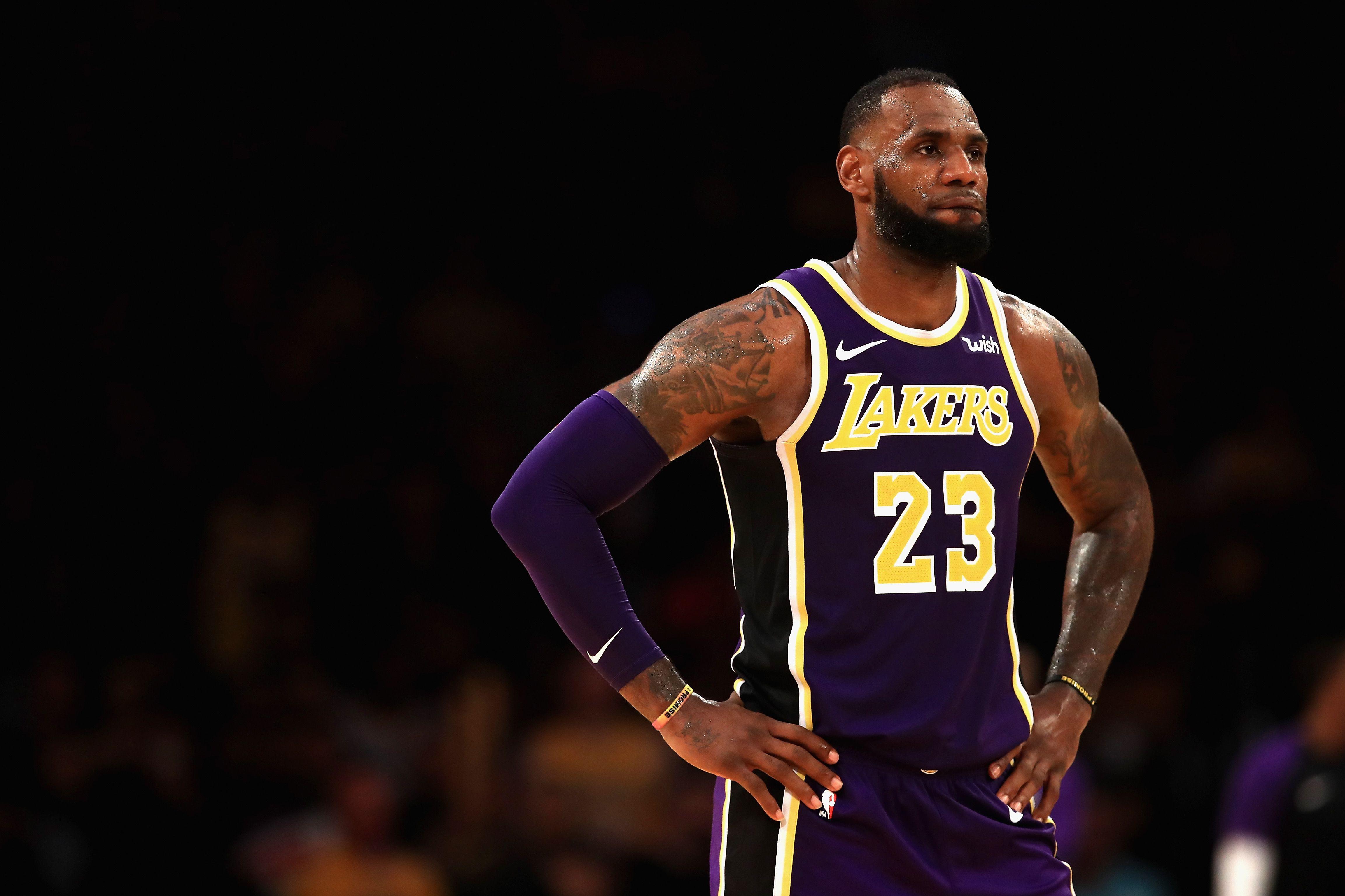
The hardwood is silent. But for two decades, one man has made it roar.
LeBron James Biography 2026: The Full Story of His Life, Career, and Legacy
There are athletes who dominate a sport, and then there are those who transcend it entirely. LeBron Raymone James Sr. belongs to the second category. He is more than a basketball player; he is a global icon, a business mogul, a social activist, and a living emblem of sustained excellence. From the moment he first stepped onto an NBA court on October 29, 2003, the world understood that something different had arrived - a 6-foot-9, 250-pound force of nature with the court vision of a point guard, the explosiveness of a gazelle, and the basketball IQ of a seasoned coach. Over 23 seasons and counting, LeBron has not only lived up to the impossible hype; he has shattered it, rebuilt it, and made the extraordinary look routine.
This is the complete, unabridged story of LeBron James. We will walk through his hardscrabble beginnings in Akron, Ohio, his fairy-tale high school career, the seismic 2003 NBA Draft, his four championships with three different franchises, his historic scoring record, his burgeoning business empire, and the timeless debate over his place among the greatest of all time. Every date, every statistic, every pivotal moment is here, woven together with the human thread that makes LeBron's journey so compelling. By the end, you will not only know *what* he achieved, but *how* - and *why* it matters.
Before the fame, the money, and the rings, there was just a boy and a ball.
Part One: Early Life and Background - A Kid from the Inner City
Birth, Family, and the Akron Streets
LeBron James was born on December 30, 1984, in Akron, Ohio, to Gloria Marie James, who was just 16 years old at the time. His biological father, Anthony McClelland, had a history of legal troubles and was absent from LeBron's life from the beginning. Gloria raised her son as a single mother, and their early years were defined by instability. The pair moved from apartment to apartment, often living in the most crime‑ridden sections of Akron. Gloria worked multiple low‑wage jobs, but money was always scarce. There were stretches where LeBron missed school for weeks because the family simply did not have a permanent address.
Despite the chaos, Gloria instilled in LeBron a deep sense of loyalty, humility, and resilience. She gave him a small basketball hoop when he was a toddler, and it soon became his most prized possession. He would spend hours shooting on the streets, using the game as an escape from the harsh realities around him. Neighbors later recalled seeing a hugely talented boy dribbling up and down the cracked asphalt, already displaying a physical maturity far beyond his years.
Early Influences and Introduction to Basketball
LeBron's first organized team was the East Dragons of the Amateur Athletic Union (AAU) in Akron. Under the guidance of coach Frankie Walker, a local youth mentor who eventually took LeBron into his own home, his natural gifts began to crystallize. Walker, his wife Pam, and their three sons provided the stable family environment that LeBron had lacked, and they remain an extended part of his family to this day. It was during this period that LeBron developed the unselfish, pass‑first mentality that would later define his professional career. “I learned that the game is about making everyone around you better,” James later said. “That lesson stayed with me my whole life.”
Another pivotal influence was his AAU teammate and longtime friend Dru Joyce III, whose father, Dru Joyce II, coached the Northeast Ohio Shooting Stars. Together, LeBron, Dru Joyce III, Sian Cotton, and Willie McGee formed a core that would eventually dominate high school basketball as a group known as “The Fab Four.” The AAU circuit gave LeBron his first taste of national competition - and his first experiences being hunted by scouts and media.
Part Two: High School Career - The Hype Machine Begins
LeBron enrolled at St. Vincent‑St. Mary High School (SVSM), a private Catholic school in Akron, for the 1999‑2000 academic year. Standing 6‑foot‑3 as a freshman, he immediately seized the starting small forward position and led the Fighting Irish to a 27‑0 record and a Division III state championship - the school’s first in 16 years. By the end of that season, he was named Ohio’s Mr. Basketball, the first sophomore to ever win the honor.
National Attention and Media Frenzy
By his junior year, LeBron had grown to 6‑foot‑7 and was already a household name. ESPN began broadcasting his games nationally, and his image appeared on the cover of *Sports Illustrated* in February 2002 under the now‑immortal headline: “The Chosen One.” The article prophesied NBA superstardom, setting a level of expectation that no American high school athlete had ever faced. Every game sold out large arenas that SVSM had to rent to accommodate the crowds. Opposing teams tried every defense - gimmick zones, double teams, physical intimidation - nothing worked. LeBron averaged 29 points, 8.6 rebounds, and 5.8 assists that season, and the Irish won their third consecutive state title.
Key Achievements and Milestones at SVSM
As a senior, LeBron led St. Vincent‑St. Mary to a 25‑1 record and a fourth Ohio Division II state championship. He averaged 31.6 points, 9.6 rebounds, 4.6 assists, and 3.4 steals per game. For his high school career, he accumulated 2,657 points, a school record. He was a three‑time Mr. Basketball, a two‑time Gatorade National Player of the Year, and the first junior ever named Naismith Prep Player of the Year. By the time he walked across the stage at graduation, LeBron James had become the most hyped basketball prospect in history, and he had actually exceeded the hype at every turn.
Part Three: NBA Draft and Entry into the League - The 2003 Draft
The 2003 NBA Draft is now regarded as one of the greatest in league history, and its headliner was never in doubt. The Cleveland Cavaliers held the No. 1 overall pick, and they were fortunate enough to have the opportunity to select both a generational talent and a hometown hero. On June 26, 2003, at Madison Square Garden, Commissioner David Stern strode to the podium and announced: “With the first pick in the 2003 NBA Draft, the Cleveland Cavaliers select LeBron James, from St. Vincent‑St. Mary High School.” LeBron, wearing an all‑white suit, clasped his hands in a gesture of gratitude and pure determination.
Expectations and Comparisons
Even before his first dribble, LeBron was being compared to Magic Johnson, Michael Jordan, and Oscar Robertson. The Cavaliers immediately built their entire franchise around him, and the city of Cleveland - a city starved for a champion in any sport - pinned its hopes on an 18‑year‑old. The economic impact was immediate: season‑ticket sales skyrocketed, and the Cavs became a national television draw. The pressure was enough to crush most teenagers, but LeBron absorbed it and turned it into fuel.
Part Four: Cleveland Cavaliers Era (First Stint) - From Rookie to Superstar
Rookie Season and Rapid Rise
LeBron made his NBA debut on October 29, 2003, scoring 25 points against the Sacramento Kings. He finished his rookie campaign averaging 20.9 points, 5.5 rebounds, and 5.9 assists per game, becoming the third player in NBA history - and the first in 39 years - to average at least 20‑5‑5 as a rookie. He was unanimously named NBA Rookie of the Year. More importantly, the Cavaliers doubled their win total from the previous season, and a sense of genuine hope returned to the shores of Lake Erie.
Team Performance and Playoff Heartbreak
Over the next six seasons, LeBron transformed the Cavaliers into a perennial playoff team. In 2007, at just 22 years old, he orchestrated one of the most memorable individual playoff performances in history: scoring 29 of Cleveland’s final 30 points, including the game‑winning layup, to defeat the Detroit Pistons in double‑overtime of Game 5 of the Eastern Conference Finals. The Cavs advanced to the NBA Finals for the first time but were swept by a seasoned San Antonio Spurs team led by Tim Duncan. After the series, Duncan famously told LeBron, “This is going to be your league in a little while.”
Despite back‑to‑back 60‑win seasons in 2008‑09 and 2009‑10 - and two MVP awards - the Cavaliers kept falling short in the playoffs. A devastating loss to the Boston Celtics in the 2010 Eastern Conference Semifinals, a series in which LeBron appeared uncharacteristically passive at times, set the stage for a monumental decision.
Individual Awards and Recognition
During his first Cleveland stint (2003‑2010), LeBron won the NBA Most Valuable Player award in 2009 and 2010. He was an All‑Star every year, made six All‑NBA First Teams, and led the league in scoring in 2007‑08 (30.0 points per game). He was already being discussed among the all‑time greats, yet the lack of a championship ring became the single asterisk that his detractors clung to.
Part Five: Miami Heat Era - The Decision and the Big Three
On July 8, 2010, LeBron James sat across from ESPN’s Jim Gray at the Boys & Girls Club of Greenwich, Connecticut, and spoke the words that would change the trajectory of the NBA: “I’m going to take my talents to South Beach and join the Miami Heat.” The live, one‑hour “Decision” special was both a groundbreaking media event and a public‑relations disaster. LeBron was vilified for the manner of the announcement, and fans in Cleveland burned his jersey in the streets. But for all the anger, the basketball logic was undeniable: the Heat already had Dwyane Wade and had managed to sign Chris Bosh, creating a “Big Three” that would dominate the Eastern Conference for four consecutive years.
Championships and Finals Appearances
The Heat lost the 2011 Finals to the Dallas Mavericks, a series in which LeBron was heavily criticized for his fourth‑quarter passivity. He spent that summer working with Hakeem Olajuwon on his post game and returned a transformed player. In 2012, Miami defeated the Oklahoma City Thunder in five games, with LeBron earning his first NBA Championship and Finals MVP (averaging 28.6 points, 10.2 rebounds, 7.4 assists). The following year, 2013, the Heat edged the San Antonio Spurs in an epic seven‑game series, sealed by Ray Allen’s iconic corner three‑pointer in Game 6. LeBron won his second consecutive Finals MVP, and his legacy was forever altered: he now had the rings to match the talent.
Playing Style Evolution and Criticism
In Miami, LeBron refined his game into a terrifyingly efficient machine. His shooting percentages soared to career highs (56.5% from the field in 2012‑13, including 40.6% from three‑point range), and he became an elite off‑ball cutter and post‑up threat. He also transformed his defense, becoming a legitimate Defensive Player of the Year candidate who could guard all five positions. The “villain” persona that came with joining a superteam only sharpened his competitive edge; he learned to embrace the hate and channel it into his performance.
Part Six: Return to Cleveland Cavaliers - Redemption and an Historic Championship
Reasons for Returning
On July 11, 2014, LeBron published a heartfelt essay in *Sports Illustrated* co‑written with Lee Jenkins, announcing his return to the Cleveland Cavaliers. In it, he confessed, “I always believed that I’d return to Cleveland and finish my career there.” His motivation was more than basketball: he wanted to bring a championship to Northeast Ohio, a region that had not celebrated a major sports title since 1964. The Cavaliers immediately became title favorites, with a core including Kyrie Irving and the newly acquired Kevin Love.
The 2016 NBA Championship and Historic Comeback
The 2016 NBA Finals against the Golden State Warriors (who had set a regular‑season record with 73 wins) became an instant classic. The Cavaliers fell behind 3‑1 - a deficit that no team in NBA history had ever overcome in the Finals. LeBron then delivered two of the greatest games of his career: 41 points in Game 5, another 41 in Game 6, and a triple‑double (27 points, 11 rebounds, 11 assists) in Game 7. It was during that decisive Game 7 that LeBron executed a chase‑down block on Andre Iguodala with less than two minutes remaining, a play that is now simply called “The Block.” When the final buzzer sounded and the Cavs had won 93‑89, LeBron fell to the floor and wept. The city of Cleveland finally had its parade, and LeBron’s promise was fulfilled.
Legacy Impact in Cleveland
The 2016 championship elevated LeBron from superstar to immortal in Ohio. The victory is widely regarded as one of the greatest achievements in American team sports. Even after his eventual departure, his relationship with Cleveland remained healed; he had delivered the impossible.
Part Seven: Los Angeles Lakers Era - Hollywood, Legacy, and Longevity
Move to the Lakers
On July 9, 2018, LeBron James signed a four‑year, $154 million contract with the Los Angeles Lakers. The move was part basketball, part business: the Lakers provided a global platform, and LeBron set his sights on building a media and entertainment empire while also chasing more championships. However, his first season in L.A. ended in disappointment: an injury limited him to 55 games - his first major absence - and the Lakers missed the playoffs for the sixth consecutive year.
2020 Championship and Additional Successes
The Lakers retooled by acquiring Anthony Davis, and in the COVID‑19‑altered 2019‑20 season, LeBron led the team to a 52‑19 record and the NBA’s first‑ever Bubble Championship. At age 35, he averaged 29.8 points, 11.8 rebounds, and 8.5 assists in the Finals, earning his fourth Finals MVP. It was a triumph that silenced any doubt about his ability to win with a third different franchise. In the seasons that followed, the Lakers remained in the playoff conversation, but injuries and roster fluctuations have prevented another ring - at least so far.
Leadership Role and Longevity
Now in his 40s, LeBron has redefined what athletic longevity looks like. He meticulously manages his body with an annual investment of over $1 million on personal training, nutrition, recovery, and sleep. His leadership style has evolved: he is more vocal, more demonstrative, and unabashedly the face of the franchise even as younger co‑stars rise around him.
Part Eight: Playing Style and Skills Analysis - The Complete Package
LeBron James is the most versatile player in basketball history. At his peak, he could credibly play and defend all five positions on the floor. His basketball IQ is off the charts; he sees plays two or three moves before they develop, which explains why he regularly leads his team in assists despite being a primary scorer. His combination of size, speed, strength, and finesse is unmatched. Even in his late 30s, his fast‑break dunks are a spectacle, and his ability to orchestrate an offense from the top of the key rivals that of Magic Johnson.
Comparisons with Other Legends
The “GOAT” (Greatest of All Time) debate inevitably pits LeBron against Michael Jordan. While Jordan was a more lethal pure scorer and perhaps the game’s fiercest competitor, LeBron’s all‑around statistical footprint - points, rebounds, assists, field‑goal percentage, and longevity - surpasses nearly every measure. He is frequently compared to Magic Johnson for his passing, to Karl Malone for his durability, and to Oscar Robertson for his triple‑double prowess. The truth is that LeBron is a unique hybrid for which there is no perfect historical analogue.
Part Nine: Achievements and Records - The Numbers Don’t Lie
LeBron’s trophy case is staggering: 4× NBA champion (2012, 2013, 2016, 2020); 4× NBA Finals MVP; 4× NBA Most Valuable Player (2009, 2010, 2012, 2013); 19× NBA All‑Star (and counting); 3× NBA All‑Star Game MVP; 19× All‑NBA selection (including 13 First Teams); 6× NBA All‑Defensive selection (5 First Teams); NBA Rookie of the Year (2004); NBA Cup champion (2023); 2× Olympic gold medalist (2008, 2012).
Major Statistical Records and Milestones
On February 7, 2023, against the Oklahoma City Thunder, LeBron James passed Kareem Abdul‑Jabbar to become the NBA’s all‑time leading scorer (regular season), a record that had stood for 39 years. He has also amassed over 10,000 career rebounds and 10,000 career assists - the only player in NBA history to record a 40,000‑point, 10,000‑rebound, 10,000‑assist triple. He holds playoff records for most points, most field goals made, most free throws made, most games played, and most wins. His longevity stats are almost unbelievable: by his 21st season, he was still averaging 28.9 points per game.
Part Ten: Teams and Championships - The Full Journey
All Teams He Played For
1. Cleveland Cavaliers (2003‑2010, 2014‑2018)
2. Miami Heat (2010‑2014)
3. Los Angeles Lakers (2018‑present)
Detailed Breakdown of Each Championship Win
2012 NBA Finals (Heat vs. Thunder, 4‑1): LeBron put to rest the notion that he shrank in big moments. He averaged a triple‑double in the series and provided the signature Game 5 performance: 26 points, 11 rebounds, 13 assists. Finals MVP.
2013 NBA Finals (Heat vs. Spurs, 4‑3): Down 3‑2 heading into Game 6 and trailing by 5 with 28 seconds left, the Heat mounted a miraculous comeback. LeBron scored 16 points in the fourth quarter of that game, and his 37‑point Game 7 saved the series. Second consecutive Finals MVP.
2016 NBA Finals (Cavaliers vs. Warriors, 4‑3): Trailing 3‑1, LeBron authored three straight elimination‑game masterpieces, including The Block, and ended Cleveland’s 52‑year championship drought. He led both teams in points, rebounds, assists, steals, and blocks for the series - a NBA Finals first. Third Finals MVP.
2020 NBA Finals (Lakers vs. Heat, 4‑2): Inside the Disney World Bubble, LeBron dominated with 29.8 points, 11.8 rebounds, and 8.5 assists. He became the first player in NBA history to win Finals MVP with three different teams. Fourth ring, fourth Finals MVP.
Part Eleven: Off‑Court Life and Business Ventures - More Than an Athlete
Family Life
LeBron married his high school sweetheart, Savannah Brinson, on September 14, 2013, in a lavish San Diego ceremony. They have three children: LeBron “Bronny” James Jr. (born October 6, 2004), Bryce Maximus James (born June 14, 2007), and Zhuri Nova James (born October 22, 2014). The James family is an inseparable unit; Savannah is LeBron’s anchor, and his sons are following in his basketball footsteps. As of 2025‑26, Bronny is a member of the Lakers, making NBA history as the first father‑son duo to play together on the same team.
Business Empire, Endorsements, and Investments
LeBron’s business acumen is as sharp as his crossover. He has lifetime endorsement deals with Nike (reportedly worth over $1 billion), Beats by Dre, and PepsiCo. He co‑founded the SpringHill Company, an entertainment and production powerhouse responsible for the *Space Jam: A New Legacy* movie, the HBO talk show *The Shop*, and numerous documentaries. He is a part‑owner of Fenway Sports Group, which holds stakes in Liverpool FC, the Boston Red Sox, and the Pittsburgh Penguins. His net worth is estimated to exceed $1.2 billion, making him the first active NBA player to become a billionaire. He also owns Blaze Pizza franchises, has equity in Tonal and Lyft, and continually expands his portfolio into media, tech, and real estate.
Part Twelve: Philanthropy and Social Impact - Changing Lives Beyond the Game
Perhaps LeBron’s most enduring off‑court legacy is the I PROMISE School, a public elementary school in his hometown of Akron, Ohio, opened in 2018 in partnership with Akron Public Schools. The school provides at‑risk students with a rigorous curriculum, free meals, bicycles, and guaranteed college tuition for graduates from the University of Akron. LeBron also funds the LeBron James Family Foundation, which has put hundreds of kids through college and offers mentorship, housing support, and job training to struggling families. His philanthropic footprint is nine figures deep and growing.
Activism and Influence
James has never been afraid to speak his mind on racial injustice, police brutality, and voter suppression. He was a vocal supporter of the Black Lives Matter movement, helped launch the “More Than a Vote” initiative to combat voter disenfranchisement, and openly criticized political figures. His social media platforms have more followers than any other NBA player, and he uses that reach not just for brand promotion but for civic engagement. In a time when many athletes stayed silent, LeBron amplified his voice, earning him both admiration and criticism - but never irrelevance.
Part Thirteen: Latest News and Current Status (as of May 2026)
As the 2025‑26 NBA season draws to a close, LeBron James is 41 years old and completing his 23rd professional season - all of them as an elite starter. The Lakers have been anchored by his continued brilliance, and the historic father‑son partnership with Bronny has captivated the sports world. In January 2026, LeBron became the first player in league history to surpass 45,000 combined career points (regular season + playoffs). He has publicly stated that he intends to play “until I can’t give the game what it deserves,” but no formal retirement announcement has been made. Industry insiders speculate that the 2026‑27 campaign could be his farewell tour, though James himself has remained coy.
His current season averages hover around 24 points, 7 rebounds, and 6 assists - a testament to his unprecedented conditioning. The Lakers are projected to finish in the top‑half of the Western Conference playoff picture, and LeBron has already signaled that he will participate in the 2028 Olympics if physically able. No athlete in major American professional sports has ever sustained this level of performance for this long.
Part Fourteen: Legacy and Historical Ranking - The Mountain Top
LeBron James’s place in the basketball pantheon is secure, but where exactly does he sit? The consensus among a growing number of analysts, players, and historians is that he has transcended the sport’s old hierarchies. His statistical resume is unmatched in totality: the scoring record, the assist‑rebound‑point triple milestone, four championships with three different teams, and 19‑plus All‑NBA selections. Yet his impact stretches beyond numbers.
Influence on Future Generations
LeBron has inspired a generation of positionless, pass‑first superstars - Luka Dončić, Giannis Antetokounmpo, and Jayson Tatum have all cited his influence. He changed the way athletes think about career empowerment, free agency, and brand building. The LeBron model - of short‑term contracts, strategic team‑building, and ownership aspirations - is now the blueprint for the modern star.
Cultural and Global Impact
On a cultural level, LeBron is the most socially conscious African American star since Muhammad Ali. His open letter on race, his Hollywood productions, his philanthropy, and his unapologetic Black identity have reshaped what it means to be a celebrity athlete. Globally, he is a walking brand recognized from Shanghai to São Paulo. The NBA’s international explosion during his career is in no small part due to his magnetism.
The “GOAT” debate will rage forever, but one thing is clear: LeBron James is the greatest all‑around basketball player in the history of the game. He is the surest bet for a 21‑season hall of fame resume that is still being written.
Conclusion: The Unfinished Legend
We have traveled more than five thousand words through the life of LeBron James: the starlit gym of St. Vincent‑St. Mary, the deafening roar of the Miami Big Three, the tear‑soaked hardwood of the 2016 championship, the quiet heroics of the Bubble, and the new frontier of father‑son basketball. Through scandal, criticism, defeat, and triumph, LeBron never wavered from his core mission: to dominate the game while lifting up everyone around him, and to use his platform for something larger than himself. He is not done yet. The final chapters are still being written, but the arc is already legendary.
If there is one truth that LeBron James has taught the world, it is that expectation is not a ceiling - it is a starting point. The Chosen One accepted his destiny and made it the foundation for a life that will echo in sports history forever. The hardwood is still polished, the lights are still bright, and the King is still playing.
Legends never truly leave. They just change the way we watch the game.